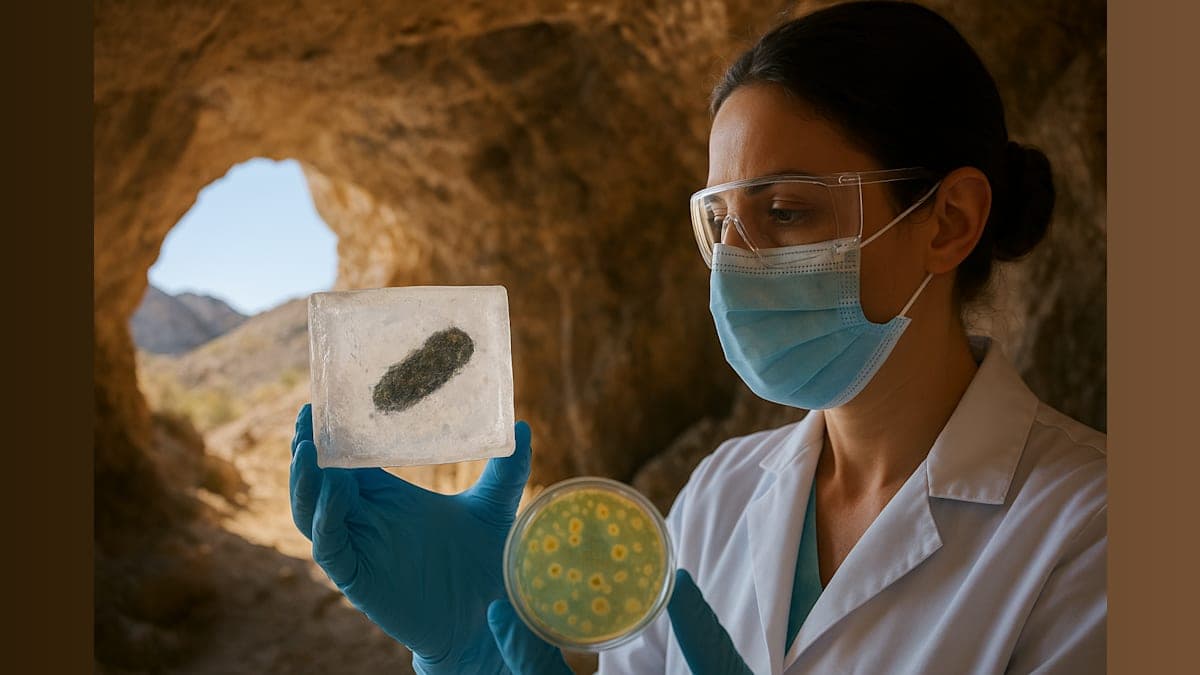
In a groundbreaking discovery that challenges conventional understanding of antibiotic resistance, researchers have determined that bacteria developed protective mechanisms against antibiotics millennia before humans ever synthesized these life-saving drugs. The revelation comes from analysis of an ancient bacterial strain that has remained frozen in cave ice for approximately 5,000 years.
The bacterial specimen, identified as belonging to the Psychrobacter genus, was extracted from pristine ice layers deep within a cave system. When scientists subjected this ancient microorganism to laboratory testing, they discovered it possessed resistance to ten different modern antibiotics—a finding that fundamentally alters the timeline of antibiotic resistance development.
Implications for Modern Medicine
The discovery carries profound implications for addressing one of the most pressing public health challenges of the current era: the proliferation of antibiotic-resistant superbugs. These dangerous pathogens have evolved resistance to multiple drug treatments, rendering conventional therapies ineffective and posing significant risks to patients worldwide.
However, the ancient Psychrobacter strain offers more than merely a historical curiosity. Laboratory analysis revealed that the bacterium demonstrates promising enzymatic activities that could prove valuable in pharmaceutical development. Most significantly, researchers observed that this prehistoric microorganism possesses the capability to inhibit the growth of modern multidrug-resistant bacteria—the very superbugs that have confounded medical professionals.
Understanding Natural Defense Mechanisms
The research underscores a critical scientific principle: antibiotic resistance represents a natural evolutionary response rather than solely a consequence of modern pharmaceutical overuse. Bacteria have engaged in chemical warfare with one another for millions of years, developing sophisticated defense mechanisms long before human intervention.
This ancient bacterial strain survived in an extreme environment, preserved in ice for five millennia while maintaining its biological properties. The pristine conditions of cave ice provided an ideal natural laboratory, effectively freezing these microorganisms in time and allowing contemporary scientists to examine their characteristics without the complications of modern environmental exposure.
Future Research Directions
The identification of inhibitory properties within this ancient bacterium opens new avenues for pharmaceutical research. Scientists may be able to isolate and study the specific enzymes and compounds that enable the Psychrobacter strain to combat other bacteria, potentially leading to the development of novel therapeutic agents.
This approach represents a paradigm shift in antibiotic development strategy. Rather than creating entirely synthetic compounds, researchers could examine natural bacterial defenses that have proven effective over thousands of years. Such bio-inspired pharmaceutical development may yield treatments that are both more effective and less likely to trigger rapid resistance development in target pathogens.
The study serves as a reminder that solutions to contemporary medical challenges may sometimes be found in unexpected places—including the frozen archives of Earth's ancient past. As antibiotic resistance continues to threaten global health security, this discovery provides cautious optimism that nature itself may hold keys to overcoming one of modern medicine's most formidable obstacles.