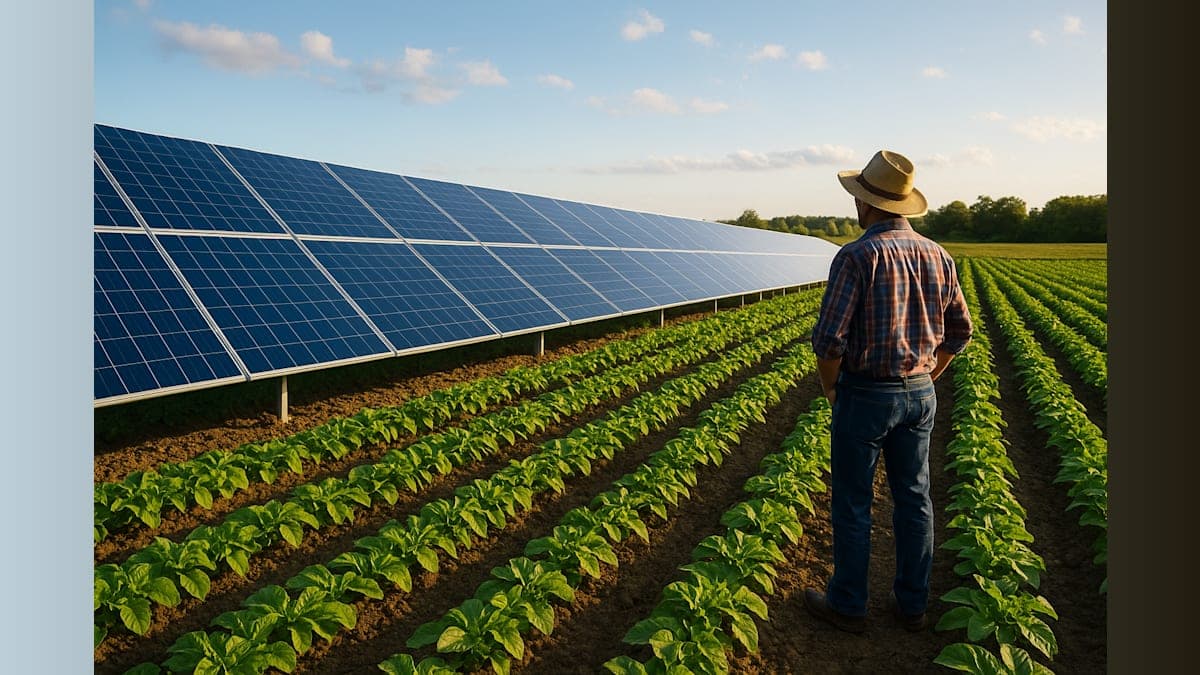
The persistent debate surrounding solar energy development has frequently centered on a fundamental concern: do large-scale solar installations threaten food security by occupying land that could otherwise support agricultural production? A comprehensive study from Western University in Ontario, Canada, suggests this concern may be fundamentally misguided.
Research led by Professor Joshua Pearce has uncovered compelling evidence that solar panels, rather than competing with agriculture, may actually serve as valuable allies in global food production. The study examined agrivoltaic systems, innovative installations where crops are cultivated beneath solar panel arrays, and discovered unexpected benefits that extend far beyond renewable energy generation.
The Protective Microclimate Effect
The research team identified that solar panels create a protective microclimate beneath their structures, fundamentally altering growing conditions in ways that benefit agricultural production. This shaded environment shields crops from increasingly common weather extremes, including devastating heatwaves and damaging hail events that have become more frequent due to climate change.
Beyond weather protection, the study documented improvements in soil health and enhanced nutrient recycling processes beneath solar installations. These factors combine to create growing conditions that, in many cases, surpass those found in conventional open-field agriculture.
Value Beyond Energy Production
Perhaps most remarkably, the research revealed that the agricultural benefits persist even when solar panels are no longer generating electricity. Decommissioned or unpowered solar arrays continue to provide the same protective microclimate effects, suggesting these structures possess long-term value that extends well beyond their operational energy-producing lifespan.
According to the study's economic modeling, passive agricultural shading from unpowered solar panels could potentially increase global crop yields by a staggering $580 billion, equivalent to approximately £435 billion. This figure represents a significant contribution to worldwide food security and agricultural productivity.
Professor Pearce emphasized the importance of reconsidering how society views aging solar infrastructure. In the published research, he stated that decommissioned or unpowered arrays should not be dismissed as obsolete but rather reconsidered as durable agronomic assets. These systems can continue to support soil conservation, reduce crop heat stress, and sustain livestock grazing even beyond their energy-producing lifespans.
Implications for Agricultural Policy
The findings carry significant implications for land-use policy and agricultural planning. Communities and policymakers who have resisted solar farm development due to food security concerns may need to reassess their positions in light of this evidence. Rather than representing a trade-off between energy production and food cultivation, agrivoltaic systems appear to offer a synergistic solution that addresses both needs simultaneously.
The research also suggests opportunities for agricultural communities to diversify income streams while maintaining or even enhancing crop production. Farmers could potentially benefit from both energy generation revenue and improved agricultural yields, creating a more resilient economic foundation for rural communities.
As climate change continues to intensify weather extremes and threaten traditional agricultural practices, the protective benefits of agrivoltaic systems may become increasingly valuable. The ability to shield crops from heat stress and extreme weather events while simultaneously generating clean energy positions these systems as a promising adaptation strategy for agriculture in an uncertain climate future.
This Canadian research adds to a growing body of evidence suggesting that thoughtfully designed renewable energy infrastructure need not conflict with food production goals. Instead, it demonstrates how innovative approaches to land use can serve multiple critical needs, supporting both the transition to clean energy and the imperative of feeding a growing global population.