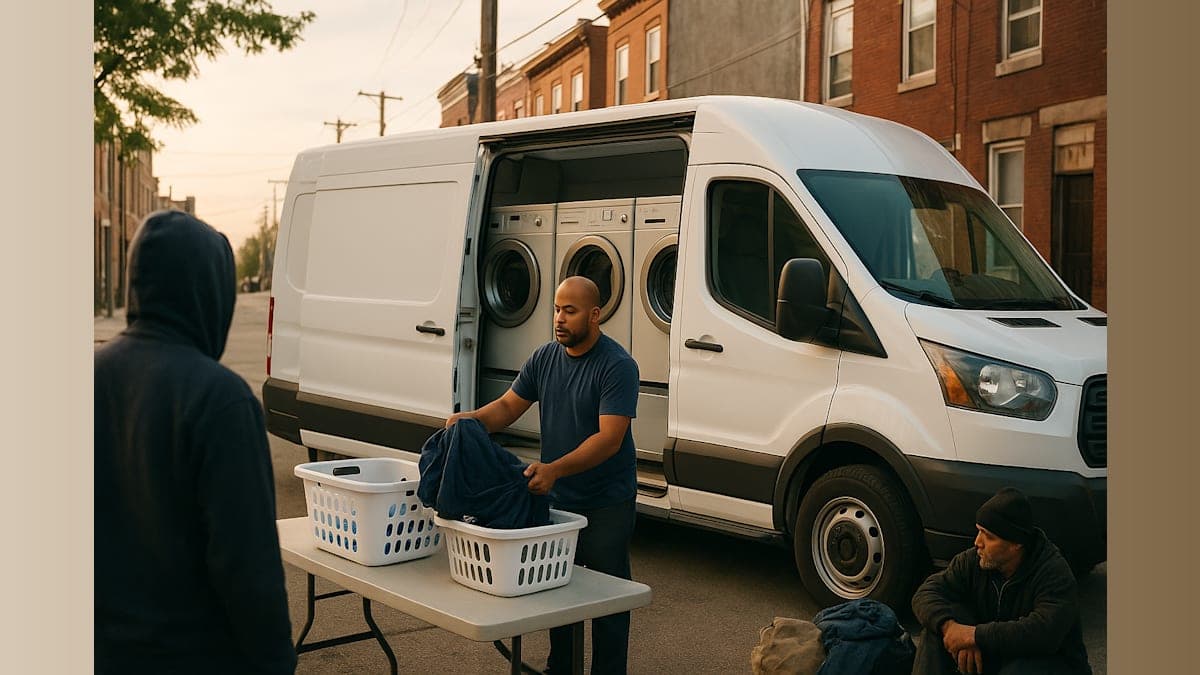
A Philadelphia resident has launched an innovative mobile laundromat service dedicated to washing clothes for the city's homeless population, combining entrepreneurial spirit with community service in a unique approach to addressing basic needs.
Joe Richardson, who operates the mobile service, brings both personal experience and family expertise to his volunteer work. Having grown up working in his family's laundromat business, Richardson possesses an intimate understanding of the laundry industry that now serves a humanitarian purpose.
The concept for the mobile laundromat emerged during a challenging period in Richardson's life. While serving a 14-year prison sentence, he developed the idea approximately 11 years before its realization. Following his release in 2021, Richardson found himself at a crossroads. Although grateful for the opportunity to rebuild his life through his family's business, he sought a more meaningful direction for his efforts.
The mobile laundromat operates from a trailer that Richardson tows behind his truck, positioning it at various locations throughout the city. During a recent visit from NBC 10, the service was stationed at the intersection of Arch and Broad streets, where Richardson dedicated several hours to washing clothes for those in need.
The impact of this service extends beyond mere cleanliness. Richardson shared feedback from one client who articulated the profound effect of the service, stating that having clean clothes represents a blessing and contributes to improved self-esteem. This testimony underscores the connection between basic hygiene needs and personal dignity.
The service addresses a significant need within Philadelphia's community. Municipal estimates indicate approximately 5,000 residents currently experience homelessness, with 60 shelters operating throughout the city. The current mayoral administration has committed to expanding capacity by adding 1,000 additional beds across existing and new shelters, aiming to reduce the number of individuals sleeping on the streets.
Richardson's initiative represents a growing trend of mobile services designed to meet the needs of homeless populations. Similar programs in other cities have demonstrated that bringing essential services directly to those who need them eliminates barriers related to transportation, identification requirements, and other obstacles that can prevent access to traditional facilities.
The mobile laundromat model offers several advantages for service delivery. By operating on a flexible schedule and relocating to different neighborhoods, Richardson can reach individuals who might not access traditional laundromat facilities. The street-side approach also reduces the stigma some individuals may experience when seeking assistance, as services are provided in a casual, accessible manner.
For Richardson, the work has become instinctive. His years of experience in the laundry industry have prepared him technically for the task, while his personal journey has equipped him with empathy and understanding for those he serves. The volunteer commitment of several hours each week demonstrates a sustained dedication to community welfare.
This initiative highlights the importance of addressing fundamental human needs as part of comprehensive efforts to support homeless populations. While shelter expansion and housing initiatives tackle long-term solutions, services like Richardson's mobile laundromat address immediate quality-of-life concerns that affect health, employment prospects, and overall well-being.
As Philadelphia continues to grapple with homelessness, grassroots initiatives led by community members like Richardson complement municipal efforts and demonstrate the power of individual action in creating positive change. His transformation of a concept born during incarceration into a tangible service illustrates the potential for personal redemption and community contribution to intersect meaningfully.