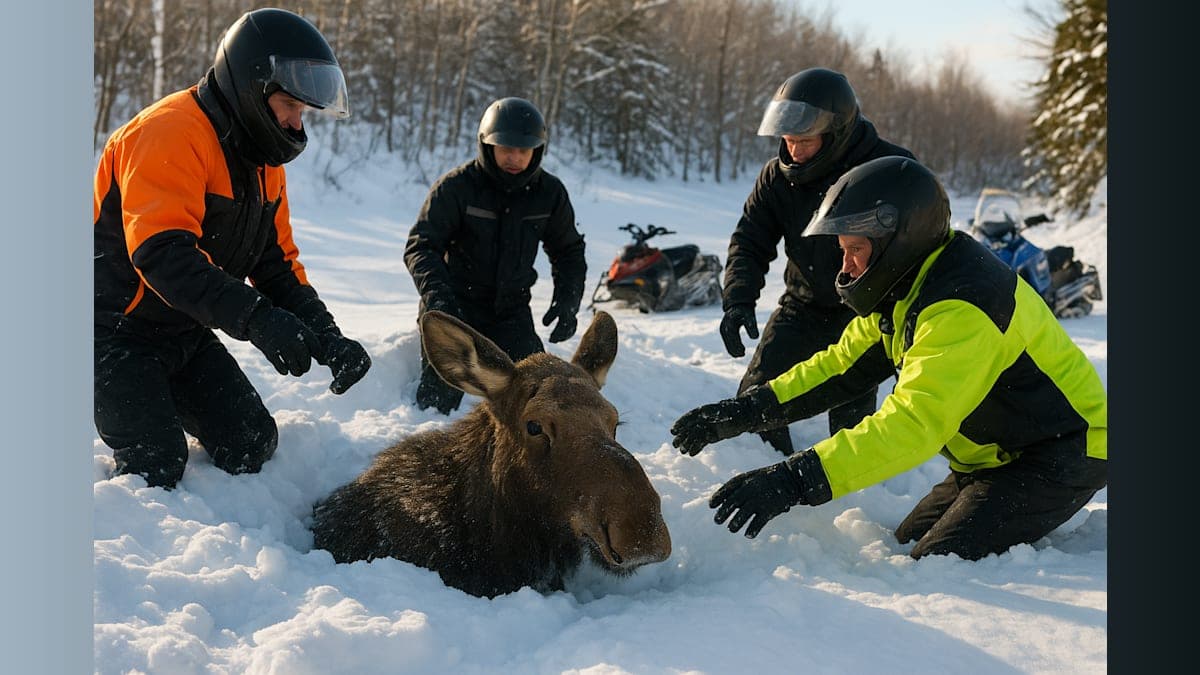
A routine snowmobiling excursion in New Hampshire transformed into an urgent wildlife rescue mission when a group of riders discovered a young moose doe trapped beneath several feet of snow, struggling for survival in the state's unforgiving winter conditions.
Mike Dion and his companions were returning home for lunch after a morning navigating snow drifts measuring four to five feet deep when they encountered the distressing scene. Only the animal's snout and a tuft of its mane remained visible above the snow, with panicked eyes betraying its desperate situation.
According to Dion's account to WMUR news, the group's immediate instinct was to contact the New Hampshire Fish and Game Department. However, the remote location rendered their cellphones useless, leaving them without service and facing a critical decision.
"Well, if we don't do nothing, the moose probably isn't going to survive," Dion recalled thinking. The statement encapsulates the moral dilemma facing the snowmobilers: intervene with an unpredictable wild animal or leave it to an uncertain fate.
A Delicate Rescue Operation
The group approached the trapped moose with considerable caution, uncertain whether the animal stood on solid ground or remained suspended in the deep snow. Despite the inherent dangers of working in close proximity to a large wild animal, they found the moose exhausted but relatively calm. The animal had clearly expended significant energy attempting to free itself without success.
The snowmobilers spent approximately 20 minutes on their hands and knees, carefully excavating snow around the trapped animal. The painstaking process required patience and steady nerves, as any sudden movement could have provoked a dangerous reaction from the stressed moose.
"Eventually, we got her up and got her going, and she seemed to be all in good health," Dion reported. "I think she was happy. She wasn't aggressive or too nasty with us. That's what we were worried about at first."
Following the successful extraction, the group remained at the scene for an additional ten minutes, monitoring the moose to ensure she had regained her stability and could navigate the terrain independently before departing.
Official Guidance and Safety Concerns
While the rescue concluded successfully, officials from the New Hampshire Fish and Game Department emphasized the significant risks associated with such interventions. A department spokesperson told WMUR that moose are inherently dangerous animals, particularly when cornered, frightened, or provoked. The recommended protocol for similar situations is to contact the department immediately and await professional assistance.
The official guidance underscores an important reality: adult moose can weigh between 800 and 1,200 pounds, possess powerful legs capable of delivering devastating kicks, and may react unpredictably when stressed. Even young moose possess sufficient strength to injure well-meaning rescuers seriously.
This incident represents part of a broader pattern of winter wildlife rescues across northern regions. Similar scenarios have occurred in Alaska, where snowmobilers required several hours to free a moose that had fallen through ice on a frozen creek. These events highlight the vulnerability of large wildlife during severe winter conditions, when deep snow can trap even powerful animals.
Understanding Moose Behavior in Winter
New Hampshire's moose population faces particular challenges during harsh winters. The animals typically conserve energy by limiting movement and seeking areas with shallower snow or denser forest cover that provides some protection from accumulation. Young moose, lacking the experience and body mass of adults, are especially vulnerable to becoming trapped in deep snow conditions.
The incident serves as a reminder of the delicate balance between human compassion and wildlife safety protocols. While the snowmobilers' actions undoubtedly saved this particular animal's life, wildlife management professionals stress that such interventions should remain exceptional circumstances rather than standard practice.
For New Hampshire residents who encounter wildlife in distress, the Fish and Game Department maintains emergency contact protocols designed to ensure both human safety and appropriate animal care. The department possesses specialized equipment and trained personnel capable of handling large animal rescues with minimal risk to all parties involved.
The successful outcome in this case demonstrates both the compassion of outdoor enthusiasts and the unpredictable nature of winter recreation in wildlife habitat. As New Hampshire continues to experience significant snowfall this season, both residents and visitors should remain vigilant for animals in distress while prioritizing safety and proper reporting procedures.