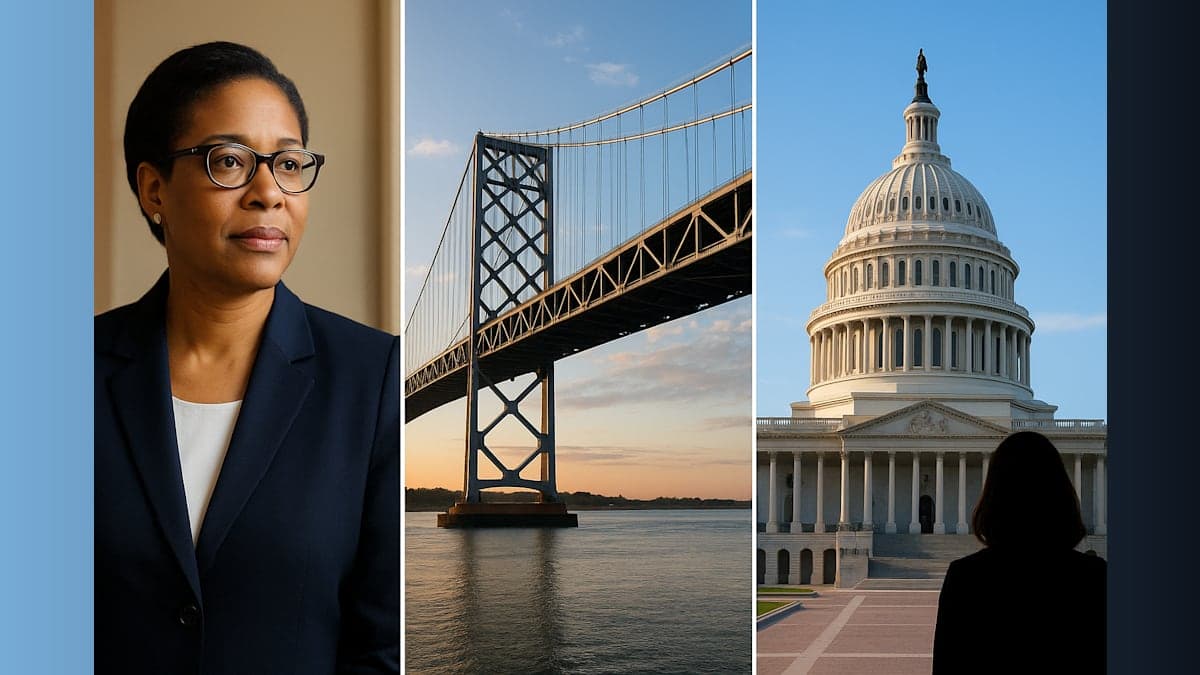
March 4 stands as a remarkable date in the annals of history, marking numerous achievements that have shaped societies across continents. From groundbreaking political appointments to engineering feats that defied the limitations of their era, this date offers a tapestry of human accomplishment worthy of reflection.
Frances Perkins: The Architect of American Labor Rights
On March 4, 1933, Frances Perkins assumed her duties as United States Secretary of Labor, shattering a significant barrier as the first woman to serve in a presidential cabinet. President Franklin D. Roosevelt appointed Perkins during one of the nation's darkest economic periods, the Great Depression, entrusting her with the monumental task of reforming American labor practices.
During her twelve-year tenure, Perkins established herself as the principal force behind the New Deal's labor provisions. Her legacy includes the creation of Social Security, the establishment of the first federal minimum wage and overtime regulations, the implementation of workplace safety standards following the tragic Triangle Shirtwaist Factory fire, and the standardization of the forty-hour work week. These reforms fundamentally transformed the American workplace and established protections that remain cornerstones of labor law today.
Engineering Excellence: The Forth Bridge Opens
Exactly forty-three years earlier, on March 4, 1890, Scotland celebrated the opening of the Forth Bridge, a magnificent railway crossing over the Firth of Forth connecting Edinburgh and Aberdeen. The structure represented a triumph of Victorian engineering and has since been recognized as a UNESCO World Heritage Site.
Designed by distinguished English engineers Sir John Fowler and Sir Benjamin Baker, the bridge held the distinction of being the world's longest cantilever bridge for nearly three decades. The construction required 55,000 tonnes of steel and 140,000 cubic yards of masonry. The engineering precision proved remarkable during load testing in January 1890, when two trains totaling 1,880 tons—more than twice the design specifications—crossed without incident. Even during a violent storm prior to opening, the cantilevers deflected less than one inch, demonstrating exceptional craftsmanship.
The Duke of Rothesay, who later ascended to the throne as King Edward VII, officially opened the bridge by driving home a gold-plated commemorative rivet. In 2016, Scottish citizens voted the Forth Bridge their greatest man-made wonder, cementing its status as a national symbol.
Breaking Barriers in Canadian Jurisprudence
On March 4, 1982, Justice Bertha Wilson made history as the first woman appointed to the Supreme Court of Canada. Prime Minister Pierre Trudeau selected Wilson despite her unconventional path to Canadian law—she had completed a Master of Arts in philosophy in her native Scotland before immigrating to Canada and subsequently pursuing legal studies.
Justice Wilson's career demonstrated a pattern of pioneering achievement. She became the first female associate and later the first female partner at the prestigious firm Osler, Hoskin & Harcourt, followed by her appointment as the first woman on the Court of Appeal for Ontario in 1975.
Her Supreme Court rulings proved foundational to Canadian law, particularly regarding applications of the 1982 Canadian Charter of Rights and Freedoms. In the landmark case R v Lavallee (1990), Wilson authored a judgment recognizing battered woman syndrome as a legally valid self-defense argument, reasoning that expert testimony could counter stereotypes inherent in lay reasoning. Former Chief Justice Brian Dickson praised her judicial writing, stating that her judgments possessed "simplicity, grace, rationality and humanity."
Additional Notable Events
March 4 has witnessed numerous other significant moments throughout history. In 1791, Vermont became the fourteenth United States state, notable for being the first to partially abolish slavery. The state, whose name derives from the French for "green mountain," remains seventy-five percent forested and serves as a major producer of maple syrup.
In 1929, Charles Curtis became the first Native American Vice President of the United States, serving under Herbert Hoover. A member of the Kaw Nation and former Kansas attorney, Curtis made another progressive decision by employing a woman, Lola M. Williams, as his secretary rather than following the customary practice of hiring a man.
The date also marks the 1917 swearing-in of Jeannette Rankin of Montana as the first woman to serve in the United States Congress, and the 1954 announcement by a Boston hospital of the first successful kidney transplant, a medical breakthrough that has since saved countless lives.
These anniversaries serve as reminders of human capacity for innovation, courage, and progress. The individuals and achievements commemorated on March 4 demonstrate that determined individuals can overcome societal barriers and create lasting change that benefits generations to come.