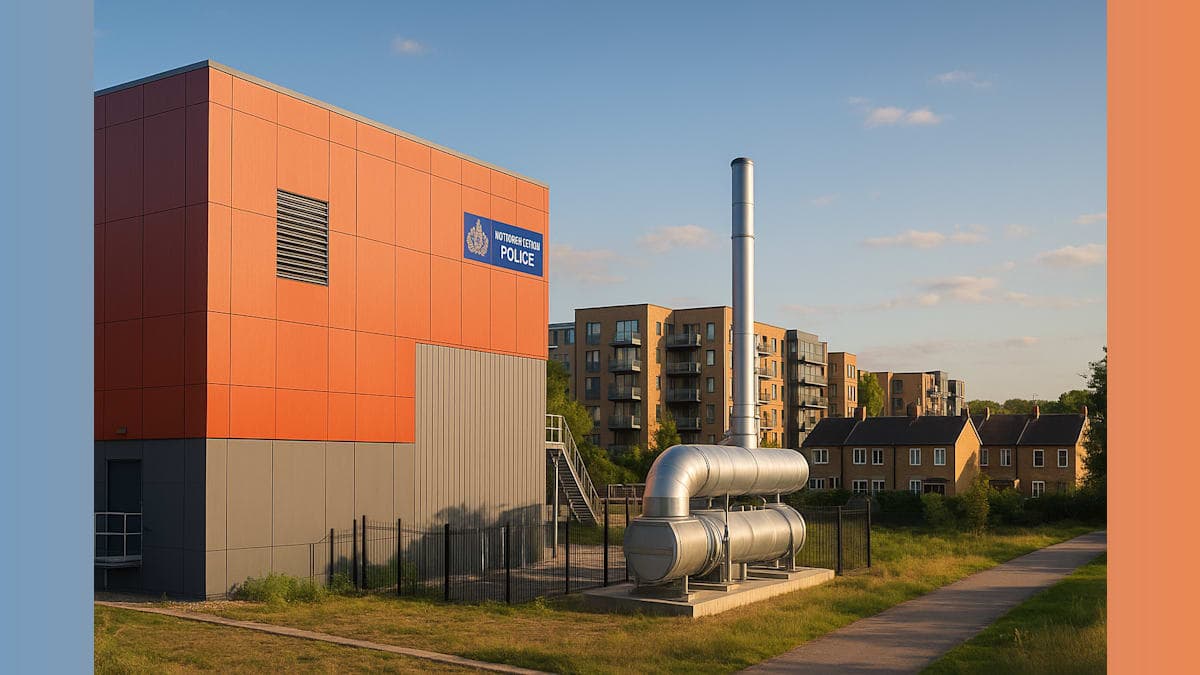
A transformative energy initiative in west London will convert waste heat from the Mopac Tower data centre into a sustainable heating source for thousands of residential units, marking one of the most significant applications of heat recovery technology in the United Kingdom.
The ambitious Earl's Court redevelopment project, valued at £8 billion and spanning 44 acres, will deploy an ambient loop network system to capture and redistribute thermal energy that would otherwise be wasted. This innovative approach addresses the substantial challenge of implementing sustainable infrastructure within London's complex urban environment, which contains millennia of historical structures and extensive underground networks.
How the System Operates
The network functions by circulating low-temperature water through underground pipes, collecting thermal energy from multiple sources including the Metropolitan Police data centre, nearby Underground tunnels, and additional local heat generators. Building-level heat pumps subsequently elevate the captured thermal energy to temperatures suitable for residential heating and hot water provision.
According to the development's sustainability documentation, these systems achieve approximately 264 percent efficiency, substantially exceeding traditional gas boilers which typically operate between 80 and 90 percent efficiency. This superior performance stems from the fundamental difference in operation: the system transfers existing heat rather than generating it through combustion, resulting in significantly reduced energy consumption.
Carbon Neutrality and Future Expansion
Peter Runacres, head of urban futures at the Earl's Court Development Company, stated that the development aims to achieve operational net-zero carbon emissions from its initial launch. The long-term vision extends beyond self-sufficiency, with plans to become energy positive and export low-carbon heating to surrounding communities.
The project represents one of the largest privately funded heat network systems in the nation, with the £8 billion investment supplemented by £1.3 million in public grants. This financing model demonstrates the viability of large-scale sustainable infrastructure development through predominantly private sector investment.
Addressing Consumer Protection Concerns
The implementation of heat networks in Britain has historically encountered challenges including service outages, delayed maintenance responses, and unclear pricing structures. Recognizing these issues, Ofgem will assume statutory regulatory authority over heat networks in the coming year, with commitments to ensure consumers receive fair and proportionate pricing.
The Earl's Court Development Company maintains that its design incorporates safeguards against common pitfalls. The system features inherent resilience through a backup plant, three interconnected loops that maintain two-thirds operational capacity if one section fails, and substantial storage tanks that manage demand fluctuations. The use of ambient temperature water rather than high-pressure systems reduces vulnerability compared to earlier generation networks.
Equitable Access and Regional Expansion
Questions regarding equitable access have emerged in previous heat network projects, where disparities arose between connected and non-connected properties. Development officials confirmed that all buildings within the masterplan boundary will have connection options available, though participation will remain voluntary rather than mandatory.
Ongoing discussions with the London boroughs of Hammersmith and Fulham, as well as Kensington and Chelsea, explore possibilities for extending network connections across administrative boundaries. Such expansion could contribute to fuel poverty reduction initiatives in neighboring communities.
International Context and Precedents
While ambient loop systems remain relatively novel in the United Kingdom, comparable smaller-scale implementations already function at locations such as One New Change in the City of London. Scandinavian nations, particularly Sweden and Denmark, have deployed district heating infrastructure far more extensively, benefiting from planning frameworks that facilitate shared energy systems and historically elevated heating costs that incentivized technological innovation.
The Earl's Court project represents a significant advancement in British sustainable energy infrastructure, demonstrating how existing urban assets can be repurposed to address climate objectives while meeting the practical heating needs of thousands of residents. As regulatory frameworks evolve and technology matures, such systems may become increasingly prevalent across London and other major British cities seeking to reduce carbon emissions while maintaining energy security.