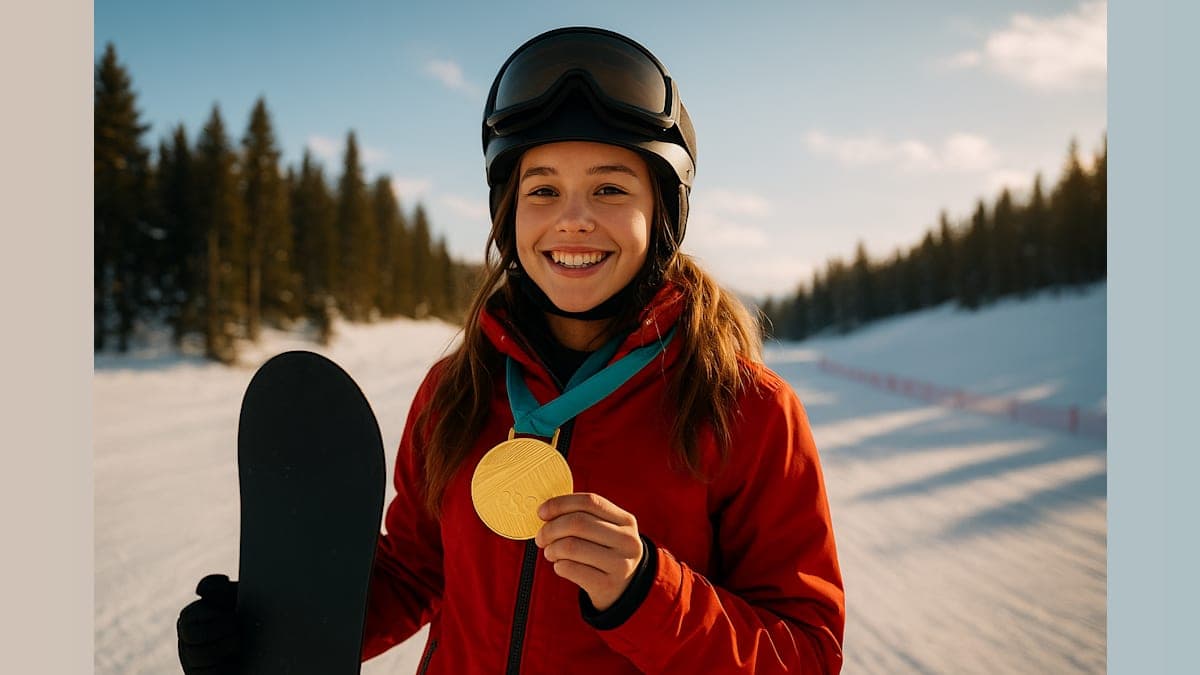
The path from childhood dreams to Olympic glory requires extraordinary dedication, talent, and perseverance. For one remarkable snowboarder, that journey began at the tender age of four and culminated in a historic achievement that redefined what young athletes could accomplish on the world's biggest stage.
At the 2018 Winter Olympics, this determined athlete etched her name into the record books by becoming the youngest woman ever to win an Olympic snowboarding medal in the women's halfpipe competition. Her groundbreaking performance demonstrated not only exceptional athletic ability but also the mental fortitude required to compete at the highest level while still in her teenage years.
The significance of her achievement extends beyond personal accomplishment. By securing Olympic gold at such a young age, she shattered preconceived notions about the timeline required for athletic development and proved that age need not be a barrier to excellence. Her success has inspired countless young athletes to pursue their own Olympic dreams with renewed vigor and confidence.
The discipline required to reach Olympic-level competition typically demands years of intensive training, countless hours on the slopes, and unwavering commitment to improvement. Starting at four years old provided this athlete with a foundation that would prove invaluable as she progressed through increasingly competitive levels of the sport. Her early introduction to snowboarding allowed her to develop both technical skills and an intuitive understanding of the halfpipe that would eventually set her apart from her competitors.
The women's halfpipe event represents one of the most technically demanding disciplines in snowboarding. Athletes must execute a series of aerial maneuvers while maintaining speed and control within the curved walls of the halfpipe structure. Judges evaluate competitors based on the difficulty of their tricks, execution quality, amplitude, and overall flow throughout their run. Achieving Olympic gold in this event requires mastery of all these elements under intense pressure.
As the sporting world looks ahead to future competitions, including upcoming events in Milan, this athlete's legacy continues to grow. Her historic achievement at the 2018 Olympics serves as a benchmark for aspiring snowboarders worldwide and demonstrates the potential for young athletes to compete successfully against more experienced competitors when talent meets opportunity.
The impact of her success resonates particularly strongly within youth sports communities, where her story provides tangible evidence that dedication and early commitment can yield extraordinary results. Parents and coaches often cite her example when encouraging young athletes to remain focused on their goals despite the challenges inherent in pursuing Olympic-level competition.
Her journey from a four-year-old learning to navigate snowy slopes to an Olympic gold medalist represents more than individual achievement. It symbolizes the evolution of women's snowboarding as a sport and highlights the increasing opportunities available to female athletes in winter sports. Her success has helped elevate the profile of women's halfpipe competition and attracted new audiences to the sport.
The road ahead promises continued excellence as this champion athlete builds upon her historic foundation. With years of competitive snowboarding still ahead, the sporting world eagerly anticipates future performances that may add to an already impressive legacy. Her story serves as a powerful reminder that greatness often begins with a single decision to pursue a passion, regardless of age or circumstance.