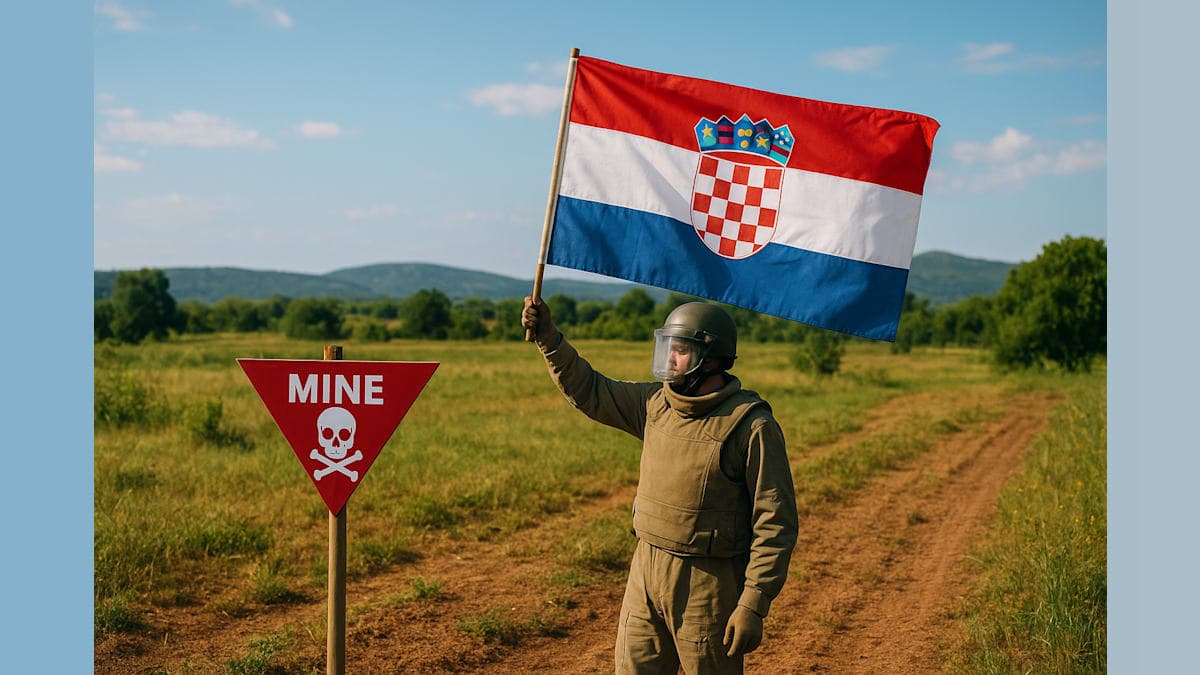
In a remarkable demonstration of national commitment and international cooperation, Croatia has officially declared itself free from landmines, marking the end of a nearly three-decade campaign to rid the nation of deadly remnants from its civil war. The announcement comes 31 years after the conflict that accompanied the dissolution of Yugoslavia, during which an estimated 1.5 million landmines were deployed across the Croatian landscape.
Interior Minister Davor Božinović formalized the declaration during a ceremony in Zagreb, stating that Croatia has completed its demining operations in full compliance with the Ottawa Convention, the international treaty prohibiting anti-personnel mines. The achievement represents not merely a technical accomplishment but the fulfillment of what Božinović characterized as a moral obligation to mine victims and their families.
Scope of the Demining Operation
The scale of the demining effort proved extraordinary by any measure. Over the course of the campaign, personnel removed approximately 107,000 mines and an additional 407,000 pieces of unexploded ordnance from Croatian territory. The contaminated area originally spanned an estimated 5,000 square miles, though safety concerns made precise measurements difficult during the initial assessment phase. Through systematic clearance operations, authorities ultimately confirmed 453 square miles of actual minefield contamination—an area roughly twice the size of Zion National Park in Utah.
The comprehensive demining program employed multiple detection and clearance methodologies, including metal detectors, heavy machinery, and specially trained detection dogs. The total financial investment exceeded one billion euros, with substantial contributions from international donors supporting the domestic effort.
Implications for National Development
The successful completion of demining operations carries profound implications for Croatian society and economic development. Minister Božinović emphasized that a mine-free Croatia translates directly into enhanced family safety, expanded opportunities for rural area development, increased availability of farmland, and strengthened tourism potential. For decades, landmines and unexploded ordnance have constrained agricultural activities and rural settlement patterns, effectively rendering productive land unusable and dangerous.
Children face particularly acute risks from these weapons, as unexploded ordnance often presents as intriguing metallic objects partially visible in grass or soil. International demining organizations have long recognized this vulnerability and typically combine physical clearance operations with educational campaigns in schools, teaching children to identify and avoid potentially deadly devices.
Human Cost of Success
The achievement came at a tragic human cost. Between 40 and 60 demining personnel lost their lives during the clearance operations, sacrificing themselves to ensure future generations could inhabit their homeland without fear. These individuals worked under extraordinarily dangerous conditions, systematically clearing contaminated areas meter by meter to restore safety to Croatian territory.
Global Context and Precedent
Croatia joins a select group of nations that have successfully eliminated landmine contamination from their territories. Mozambique achieved mine-free status in 2015 after a 20-year campaign that cleared approximately 171,000 mines. However, the global challenge remains substantial. Experts estimate that tens of thousands of square miles worldwide continue to harbor minefields or areas contaminated by unexploded ordnance from past conflicts.
The Croatian success story demonstrates that with sustained commitment, adequate resources, and international cooperation, nations can overcome the deadly legacy of armed conflict. The declaration serves as both a celebration of achievement and an inspiration for other mine-affected countries pursuing similar goals. As Croatia moves forward into a safer future, its experience provides a valuable blueprint for comprehensive demining operations and national recovery from the persistent threats posed by landmines and unexploded ordnance.