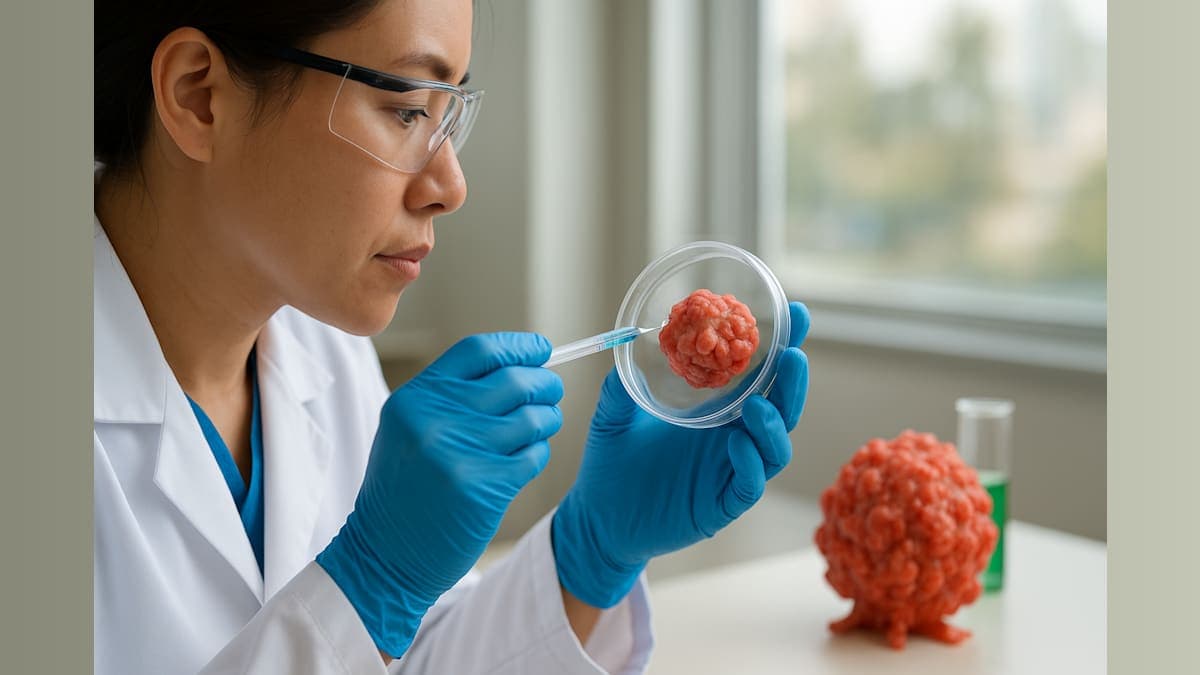
A team of scientists at the University of Waterloo in Ontario has achieved a significant breakthrough in cancer treatment research by engineering bacteria capable of consuming malignant tumors from the inside out. This novel therapeutic approach represents a departure from conventional treatment methods and demonstrates the potential of leveraging biological systems to combat one of medicine's most persistent challenges.
The research centers on a naturally occurring soil bacterium known as Clostridium sporogenes, which possesses a unique characteristic that makes it particularly suited for this application: it can only survive and reproduce in completely oxygen-free environments. This trait proves advantageous because the interior of solid tumors consists primarily of dead cellular material devoid of oxygen, creating an ideal habitat for the bacterium to colonize and multiply.
Dr. Marc Aucoin, a chemical engineering professor at Waterloo who leads the research initiative, explained the fundamental mechanism behind the treatment. According to Dr. Aucoin, bacterial spores introduced into the body locate tumors and enter their oxygen-depleted cores, where abundant nutrients support rapid bacterial growth. As the organisms consume these nutrients, they effectively eliminate the tumor tissue from within, establishing what Dr. Aucoin describes as a colonization of the central tumor space.
Overcoming Biological Limitations
The research team encountered a significant obstacle during development: when the bacteria reached the outer regions of tumors, exposure to even minimal oxygen levels proved fatal to the organisms, preventing complete tumor destruction. This limitation threatened to undermine the entire therapeutic approach, as partially treated tumors could continue to pose health risks to patients.
To address this challenge, the scientists employed genetic engineering techniques to enhance the bacteria's oxygen tolerance. They incorporated a gene from a related bacterial species that demonstrates superior resilience to oxygen exposure, thereby extending the organism's survival time near tumor peripheries where oxygen concentrations are higher.
However, introducing oxygen resistance created a new concern: preventing the modified bacteria from proliferating in oxygen-rich areas of the body, such as the bloodstream, where their presence could prove harmful. The solution came through an ingenious application of a natural bacterial communication system known as quorum sensing.
Precise Timing Through Chemical Signals
Quorum sensing represents a sophisticated biological mechanism whereby bacteria release chemical signals that allow them to detect the density of their population. The Waterloo research team leveraged this phenomenon to create a timing control for the oxygen-resistance gene activation. The system ensures that the protective gene only activates when bacterial populations within a tumor reach sufficient numbers, indicated by the strength of the collective chemical signal. This prevents premature activation in other areas of the body where bacterial concentrations remain low.
The researchers validated their approach through a series of experiments. Initial studies demonstrated that Clostridium sporogenes could be successfully modified to tolerate oxygen exposure. Subsequent research tested the quorum sensing control mechanism by programming the bacteria to produce a green fluorescent protein, providing visual confirmation of the system's functionality.
Path to Clinical Application
The next phase of research involves integrating both the oxygen-resistance gene and the quorum-sensing timing mechanism into a single bacterial strain. This combined system will then undergo pre-clinical trials using tumor models to assess efficacy and safety. While substantial additional research remains necessary before any potential market introduction, the work represents meaningful progress in the development of alternative cancer therapies.
This bacterial approach joins a growing array of innovative cancer treatment methodologies currently under investigation. Researchers worldwide are exploring diverse strategies ranging from electromagnetic surgical techniques and optimized combinations of existing chemotherapy protocols to cutting-edge applications of CRISPR gene editing technology and stem cell therapies. The proliferation of these varied research directions reflects the scientific community's commitment to expanding the therapeutic arsenal against cancer.
The broader context for this research includes encouraging trends in cancer survival rates. Recent data indicates that approximately seventy percent of cancer patients in North America now survive five years or more following diagnosis, representing substantial improvement over historical outcomes. Continued advancement in treatment options, including novel approaches such as the bacterial therapy being developed at Waterloo, offers hope for further improvements in patient outcomes and quality of life for those affected by cancer.
The University of Waterloo research demonstrates how fundamental understanding of microbiology, combined with modern genetic engineering capabilities, can yield innovative solutions to complex medical challenges. As this work progresses through subsequent research phases, it may eventually provide clinicians with an additional tool in the ongoing effort to improve cancer treatment effectiveness while potentially reducing the side effects associated with conventional therapies.