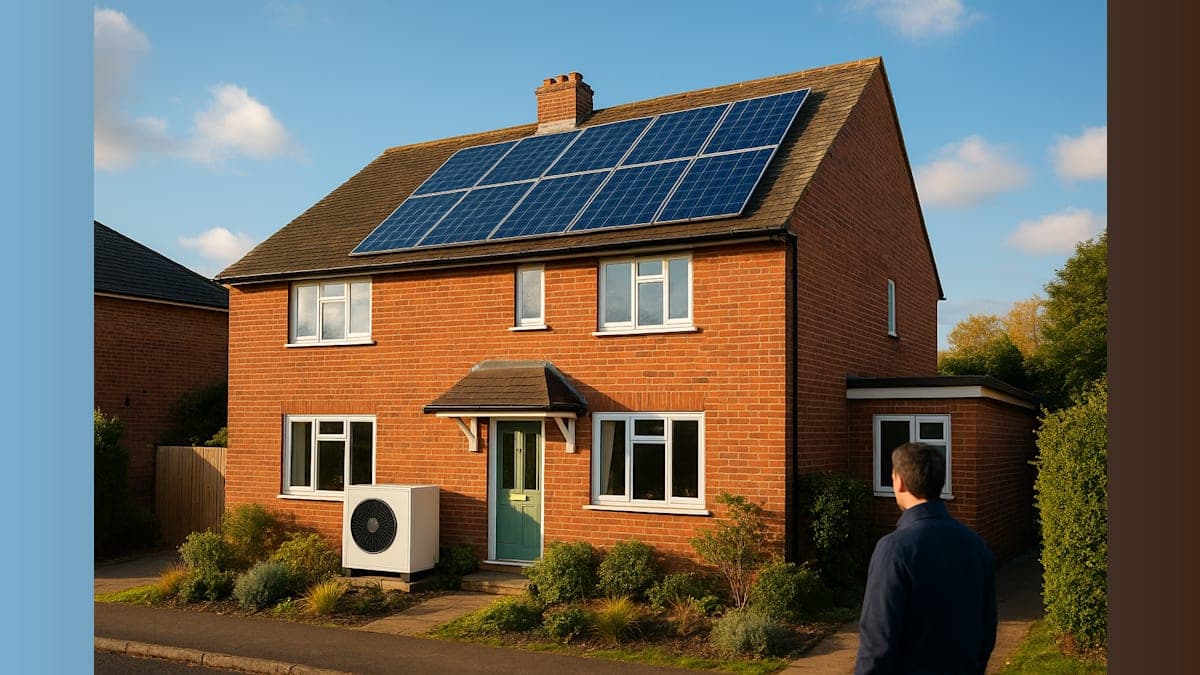
While new government regulations promise zero-carbon-ready homes for future construction, a pioneering project in Cambridge illustrates the substantial potential within Britain's existing housing stock. The Cambridge Building Society has successfully converted a standard 1930s semi-detached residence on Ferndale Rise into an A-rated, carbon-negative property, demonstrating that ambitious environmental goals are achievable even in ageing structures.
The initiative addresses a critical challenge facing the United Kingdom: approximately 29 million existing homes require some level of energy efficiency improvement. Many of these properties date to the 19th and early 20th centuries, characterized by significant heat loss, condensation issues, and elevated operating costs. The forthcoming Future Homes Standard, which mandates 75-80% emission reductions for new construction, does not extend to these legacy properties unless owners and landlords undertake voluntary upgrades.
Comprehensive Approach to Retrofit
Project manager Duncan Turner explained the rationale behind the Cambridge initiative, noting a significant gap in retrofit guidance compared to newbuild resources. The organization sought to demonstrate that older homes can exceed minimum requirements substantially, positioning renovation as equally important to new construction in achieving national net-zero objectives.
The property received extensive modifications across multiple systems. Insulation was applied comprehensively, including internal, external, cavity, roof, and floor applications. Air tightness improvements utilized an intelligent liquid membrane across all surfaces. A mechanical ventilation with heat recovery system maintains interior atmospheric stability and prevents condensation buildup.
Turner emphasized the fundamental principle guiding the work: maintaining optimal internal atmospheric conditions. The heating infrastructure consists of a single air source heat pump supplying underfloor heating throughout both floors. Solar panels generate substantial electrical power, while a modular battery system stores surplus energy for later use. Additionally, a 3,000-liter underground tank collects rainwater from downpipes, which is then redistributed to supply toilets, washing machines, and garden irrigation.
Economic Considerations and Long-Term Benefits
The project acknowledges that initial retrofit costs represent a substantial investment. However, the economic calculus differs significantly between developers and homeowners. While construction companies have limited incentive to exceed minimum standards due to their inability to capture long-term savings, property owners stand to benefit considerably from reduced utility expenditures and potential revenue generation through grid electricity sales.
The technologies employed in the Ferndale Rise project have become increasingly accessible. Costs have declined substantially over the past decade, and installation expertise has become widespread among qualified professionals. Turner's assessment is straightforward: understanding how a property loses efficiency enables targeted remediation.
Implications for National Housing Policy
The Cambridge Building Society's demonstration property serves as a comprehensive test bed rather than a prescriptive model for every homeowner. The exhaustive nature of the upgrades exceeds what most residential retrofits would require or justify economically. Nevertheless, the project establishes what is technically achievable and provides valuable data on system integration and performance.
As the Future Homes Standard takes effect over the next two years, requiring heat pumps or heat networks as default heating systems, improved insulation, high-performance glazing, and on-site renewable electricity generation for new construction, the gap between new and existing housing stock performance will widen. This disparity underscores the importance of retrofit initiatives in achieving national climate objectives.
The Ferndale Rise project demonstrates that Britain's substantial inventory of older homes need not remain a liability in the transition to sustainable living. With appropriate investment and technical expertise, these properties can be transformed into high-performance, environmentally responsible residences that serve their occupants well into the future while contributing positively to national emission reduction goals.