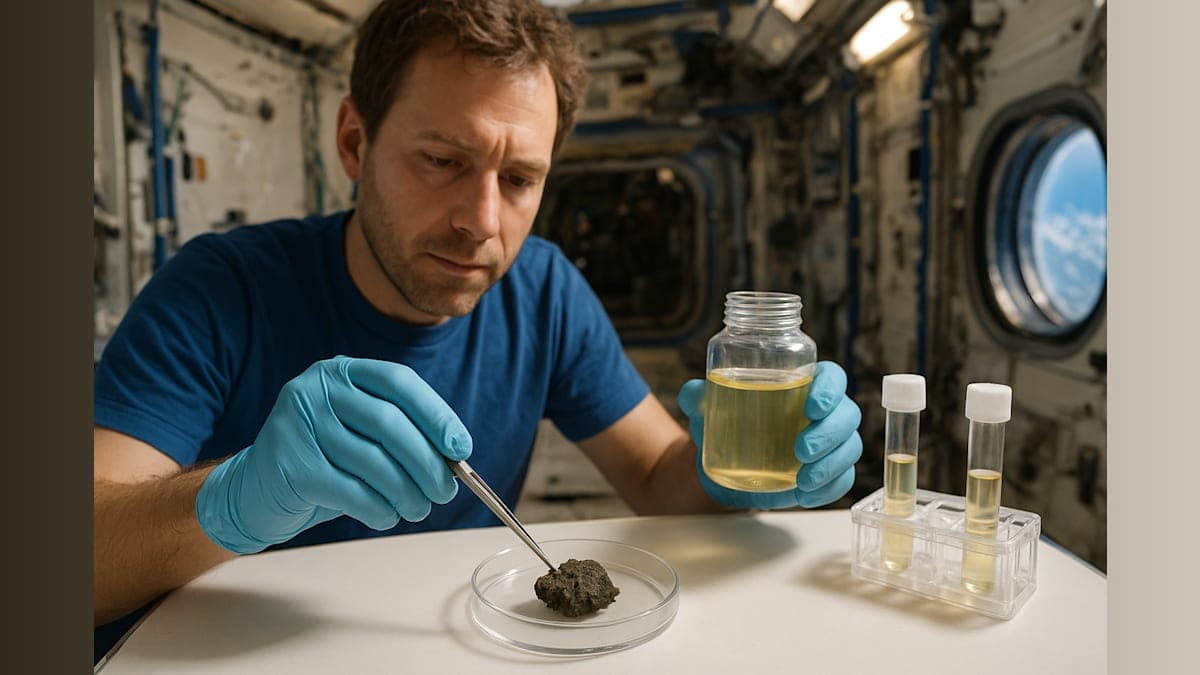
In a remarkable demonstration of biotechnology's potential beyond Earth, scientists have successfully employed microorganisms to extract valuable precious metals from meteorite samples aboard the International Space Station. The experiment marks a pivotal advancement in the emerging field of space resource utilization and sustainable mining practices.
The research team achieved the extraction of platinum and palladium—two highly valuable industrial metals—through a process termed 'microbe meteorite mining.' This biological approach represents a significant departure from traditional mining methods, utilizing naturally occurring microorganisms rather than harsh chemical processes or energy-intensive mechanical extraction.
The experiment builds upon parallel research conducted by Austrian scientists, who have been investigating the use of fungi to recover valuable metals from electronic and industrial waste materials. Both approaches demonstrate the growing recognition of biological systems as efficient, sustainable alternatives to conventional mining and recycling operations.
The implications of this breakthrough extend far beyond the confines of the space station. Platinum and palladium serve critical roles in numerous industrial applications, including catalytic converters for vehicles, electronics manufacturing, and medical devices. The ability to extract these metals from extraterrestrial sources could prove essential for future long-duration space missions and potential off-world settlements.
Conducting the experiment in the microgravity environment of the International Space Station provided researchers with unique insights into how these biological processes function under conditions that would be encountered during actual space mining operations. The success of the trial suggests that similar techniques could be employed on asteroids or other celestial bodies rich in valuable minerals.
The convergence of biotechnology and space exploration represents a promising frontier in addressing resource scarcity challenges both in space and on Earth. As space agencies and private companies increasingly focus on sustainable practices for future missions, biological mining techniques offer a lower-energy, potentially more efficient alternative to traditional extraction methods.
This development also holds significance for terrestrial applications, as the techniques refined in space could eventually be adapted to improve metal recovery from electronic waste and other sources on Earth, contributing to more sustainable resource management practices globally.