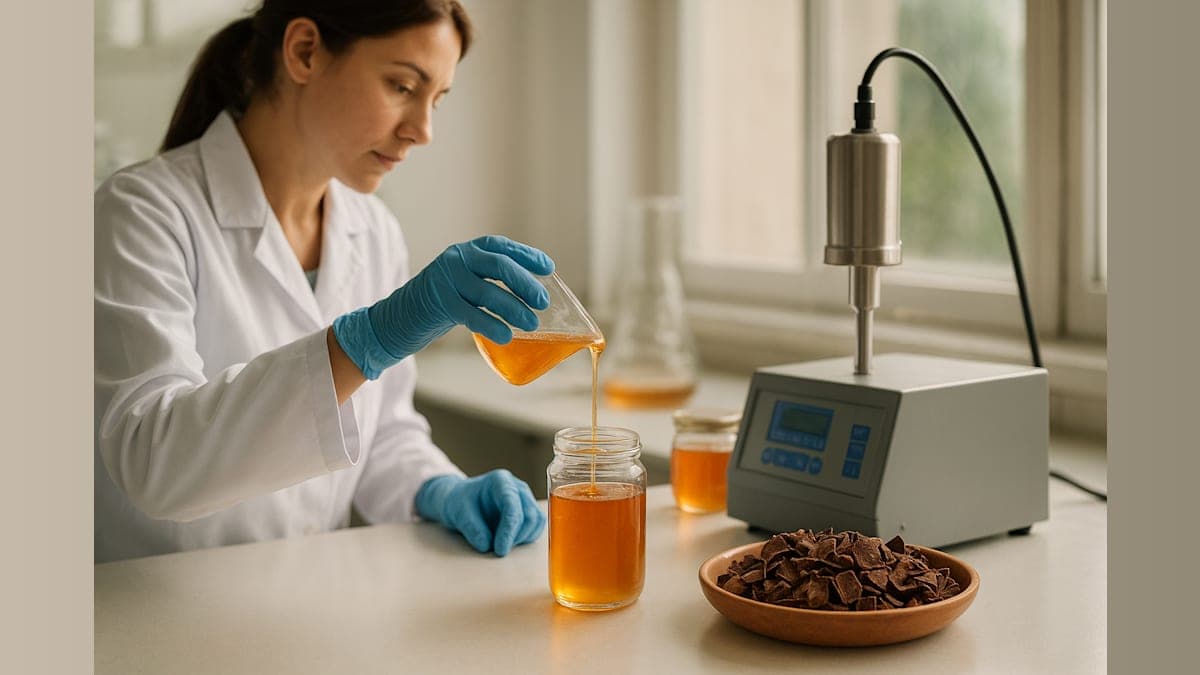
A team of researchers in Brazil has unveiled a groundbreaking technique that addresses agricultural waste while producing a nutritionally superior food product. Scientists at State University of Campinas in São Paulo have successfully demonstrated that ultrasonic wave technology can extract beneficial compounds from cocoa bean husks and infuse them directly into honey, creating what they describe as a nutrient-enriched sweetener with significant health benefits.
The innovation tackles a persistent challenge in cocoa production: the vast majority of harvested cocoa biomass consists of husks and shells that are typically discarded as waste. These byproducts, however, contain comparable levels of beneficial phytonutrients to the beans themselves, including heart-healthy polyphenols, alkaloids such as theobromine, and natural stimulants like caffeine. Until now, cocoa cultivators have lacked an economically viable method to utilize this resource.
Green Chemistry Approach Avoids Harmful Solvents
The research team employed what food scientists term "green chemistry" to extract nutrients without degrading the final product or introducing potentially harmful substances. Traditional extraction methods in processed food production frequently rely on chemical solvents such as hexane, which can pose health concerns and environmental risks. The UNICAMP researchers instead utilized honey itself as the extraction medium, eliminating the need for synthetic chemicals entirely.
The process involves placing cocoa husks and shells into a container of honey alongside an ultrasonic wave emitter. The soundwaves physically break down the plant material, releasing its nutrients into the honey. According to the research team, this ultrasonic treatment appears to eliminate existing microorganisms in the honey, potentially reducing or eliminating the need for pasteurization or refrigeration during commercial production and distribution.
Felipe Sanchez Bragagnolo, the study's lead author, explained the dual appeal of the product to Agência FAPESP. "Of course, the biggest appeal to the public is the flavor, but our analyses have shown that it has a number of bioactive compounds that make it quite interesting from a nutritional and cosmetic point of view," he stated.
Native Brazilian Bees Prove Ideal for Process
The researchers tested honey from five different species of native Brazilian stingless bees, which possess higher liquid content and lower viscosity compared to honey from European honeybees commonly used in commercial production. These physical properties proved advantageous for the extraction process. The team ultimately selected honey from the mandaguari bee, scientifically known as Scaptotrigona postica, though they noted that cocoa plantations could utilize any native bee species available in their region.
This flexibility represents a significant advantage for small-scale producers and cooperatives, potentially allowing them to work with locally available resources rather than requiring specific imported materials or species.
Commercial Applications and Economic Implications
Professor Mauricio Rostagno, who coordinated the study and developed the Path2Green software used to assess the environmental sustainability of the ultrasonic technology, emphasized the practical applications for agricultural businesses. He suggested that cooperatives and small enterprises already working with both cocoa and native bee honey could readily adopt this technology to expand their product offerings with a value-added item suitable for high-end culinary markets.
The economic implications extend beyond individual producers. By transforming waste material into a marketable product, cocoa cultivators could increase profitability while simultaneously reducing environmental impact. The enhanced honey could serve as a premium sugar substitute, appealing to health-conscious consumers seeking natural alternatives with documented nutritional benefits.
The research represents an intersection of sustainable agriculture, food science innovation, and economic development. As concerns about agricultural waste and food system sustainability continue to grow, solutions that convert byproducts into valuable commodities offer promising models for other sectors of food production. The success of this Brazilian initiative may inspire similar approaches to waste utilization in other agricultural industries worldwide.