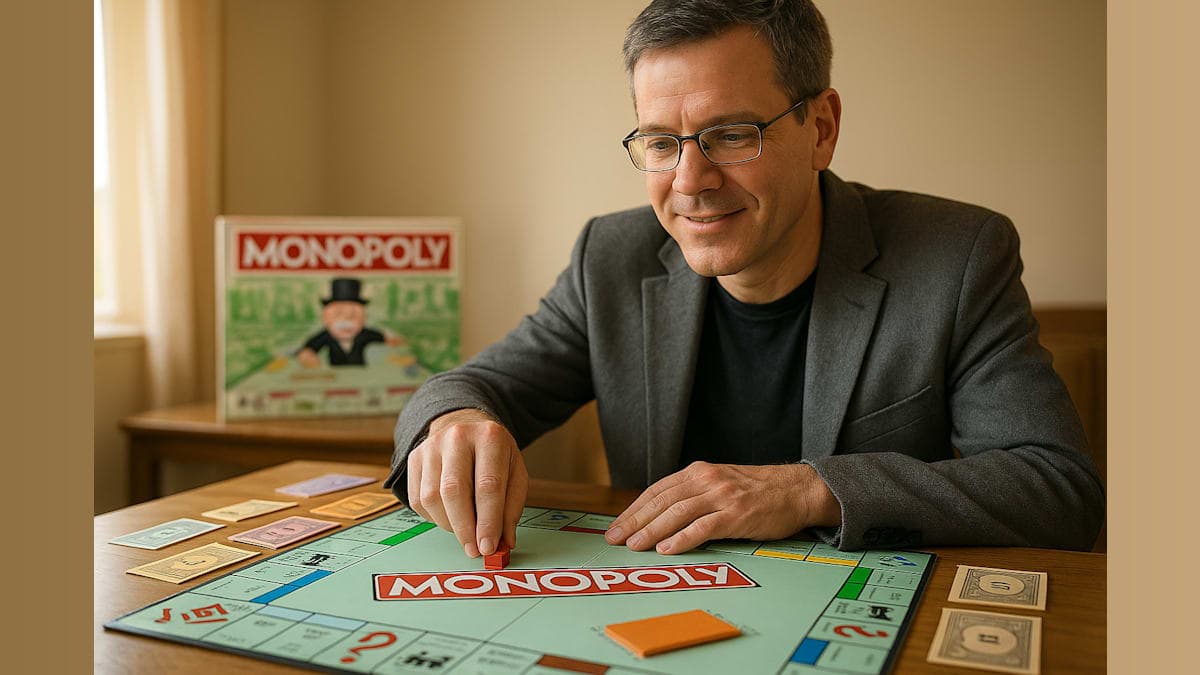
For those who have endured marathon Monopoly sessions that strain family relationships and test patience, relief may be at hand. A former World Champion has disclosed the tactical approaches that separate casual players from strategic masters of the board game that has entertained generations for nearly a century.
Jason Bunn, a 65-year-old grandfather from Leeds, England, captured the World Monopoly Championship in 1985 during the game's 50th anniversary year. His victory began with a simple response to an advertisement in a local newspaper seeking regional tournament participants. After defeating 49 competitors and advancing through the British Championships, Bunn traveled to New York where he secured the world title.
The Orange Property Advantage
According to Bunn, the foundation of successful Monopoly strategy rests upon acquiring the orange property set. In American editions, this includes St. James Place, Tennessee Avenue, and New York Avenue. These properties deliver superior return on investment, particularly because their position on the board places them in the frequent landing path of players exiting jail.
The champion emphasizes that players should attempt to purchase every property upon which they land, regardless of initial preference. This accumulation strategy strengthens negotiating position and provides leverage in subsequent property trades. Bunn identifies deal-making as the genuine skill that separates proficient players from novices.
Strategic Development and Resource Management
Rapid property development proves crucial to establishing dominance. Bunn advises constructing three houses on owned property sets as quickly as financial resources permit, as this configuration dramatically increases rental income. Advanced players can exploit the limited housing supply—the game contains only 32 houses—to create artificial scarcity that prevents opponents from developing their own properties.
The champion also addresses the counterintuitive strategy of utilizing jail time advantageously. During late-game stages when developed properties populate the board, remaining in jail provides a safe position that avoids costly rental payments while collecting income from properties already owned.
Dispelling Common Misconceptions
Bunn attributes lengthy, contentious games to widespread deviation from official rules. The popular house rule of placing fines and taxes on Free Parking for later collection does not appear in the authentic rulebook and significantly extends game duration. Adherence to proper regulations produces games that conclude in approximately 30 minutes, according to the champion, who once completed two full games during a single lunch hour.
The distinction between casual and competitive play extends beyond rule compliance to encompass strategic thinking. Bunn encourages players to evaluate each transaction through the lens of long-term board position rather than immediate gain. This approach transforms Monopoly from a game of chance into one of calculated decision-making.
A Lifelong Passion
Following his championship victory, Bunn transformed his childhood pastime into an extensive collecting endeavor spanning more than four decades. His collection now encompasses approximately 500 different Monopoly editions, including themed versions featuring Star Wars, Game of Thrones, X-Men, Coca-Cola, and Elvis. Among his prized possessions stands a handmade Welsh edition incorporating wooden inlay and solid silver game pieces valued at $800.
The collector developed a habit of acquiring local Monopoly editions during travels, treating these purchases as others might collect postcards. His enthusiasm for new releases remains undiminished, as he acknowledges the ease with which gift-givers can satisfy his interests.
Enduring Cultural Significance
The year 2025 marks the 90th anniversary of Parker Brothers' acquisition of Monopoly rights on March 19, 1935. Bunn reflects on the game's remarkable longevity, questioning what other commercial trademark has maintained such sustained popularity across nine decades. The game continues to feature prominently in family gatherings, though the champion maintains that proper rule adherence eliminates the notorious conflicts often associated with extended play sessions.
For households seeking to enhance their Monopoly performance, Bunn's strategies offer a framework grounded in competitive experience. Whether players aim to dominate family game nights or simply reduce playing time, these tactical principles provide insight into the deeper mechanics of a game that has entertained millions worldwide for nearly a century.