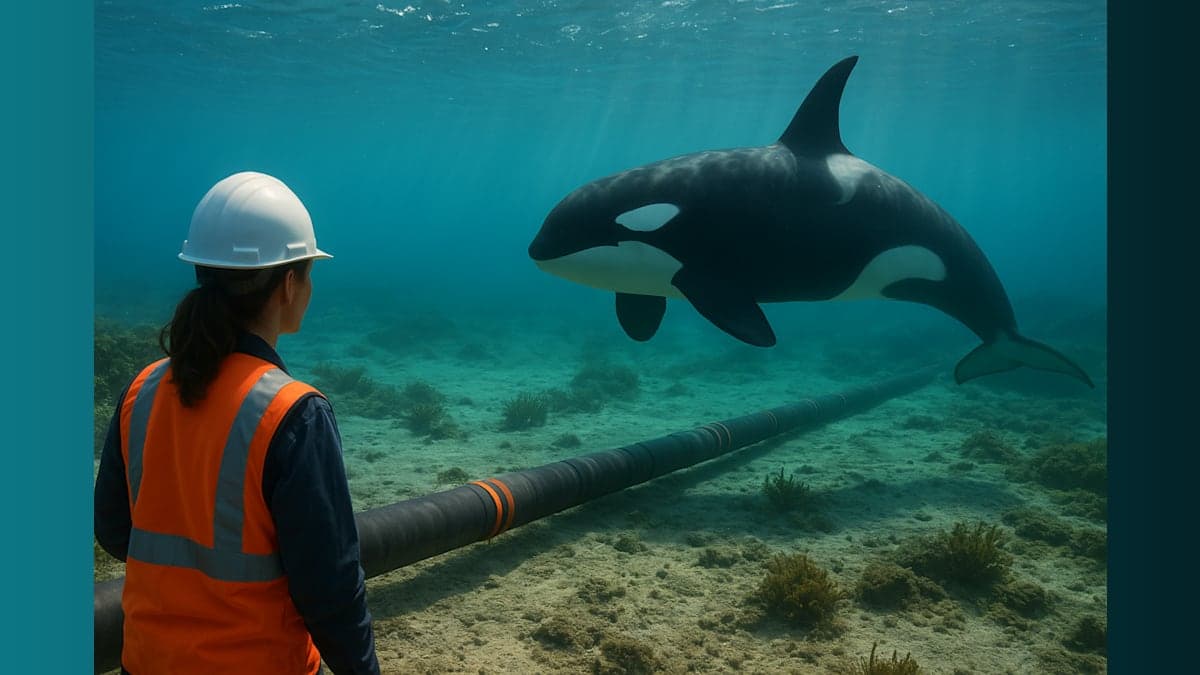
A groundbreaking conservation initiative is transforming the vast network of fiber optic cables beneath the ocean into an unprecedented monitoring system for endangered marine mammals. Scientists at the University of Washington have successfully deployed this technology in Puget Sound, establishing what could become a model for global marine conservation efforts.
The research team has installed 1.25 miles of specialized cable across Puget Sound, located just south of the Canadian border, with the specific objective of monitoring the region's critically endangered southern resident orca population. This pilot project represents a significant advancement in marine conservation technology, offering scientists the ability to track these elusive creatures with minimal environmental disruption.
Revolutionary Acoustic Sensing Technology
The methodology, known as distributed acoustic sensing (DAS), operates by transmitting laser pulses through fiber optic cables and analyzing minute disturbances created by vibrations and sound waves in the surrounding water. This sophisticated approach has already demonstrated effectiveness in seismological applications and has recently proven capable of detecting marine mammals with remarkable precision.
Dr. Shima Abadi, who leads the research initiative at the University of Washington, aims to utilize DAS technology to track orcas by identifying and mapping the distinctive clicking sounds these marine mammals produce during hunting and navigation activities. The acoustic signatures of these vocalizations are unique enough to allow researchers to monitor whale movements in real-time.
Practical Applications for Marine Safety
The successful implementation of this system could yield immediate practical benefits for marine conservation. The technology would enable the creation of early warning systems that alert maritime vessels to the presence of orcas in their vicinity. Ships could then reduce speed or alter course to minimize the risk of disturbing or injuring these vulnerable animals, addressing one of the primary threats facing whale populations in busy shipping lanes.
The implications extend far beyond the Pacific Northwest. The global ocean floor contains approximately 870,000 miles of fiber optic telecommunications cable, creating an extensive pre-existing infrastructure that could potentially be adapted for marine monitoring purposes. This network spans every major ocean basin, offering unprecedented coverage for marine mammal research and conservation.
Transformative Potential for Conservation
Dr. Abadi emphasized the transformative nature of this approach, stating that it could represent a breakthrough in conservation efforts while opening new possibilities for analysis on significantly larger temporal and spatial scales. Traditional marine mammal monitoring methods often require expensive dedicated equipment, research vessels, and can only cover limited areas at specific times.
In contrast, the DAS system operates continuously and passively, requiring no additional physical presence in sensitive marine habitats. The technology leverages existing telecommunications infrastructure, potentially reducing the cost and environmental impact of large-scale marine monitoring programs while dramatically expanding coverage areas.
The southern resident orca population, which the Puget Sound project specifically targets, faces numerous threats including vessel traffic, pollution, and declining salmon populations. Enhanced monitoring capabilities could provide critical data to inform conservation strategies and regulatory decisions affecting these endangered animals.
As this technology continues to develop and prove its effectiveness, the prospect of converting the ocean's telecommunications network into a comprehensive marine observatory represents a significant step forward in humanity's ability to understand and protect vulnerable ocean ecosystems and the species that depend upon them.