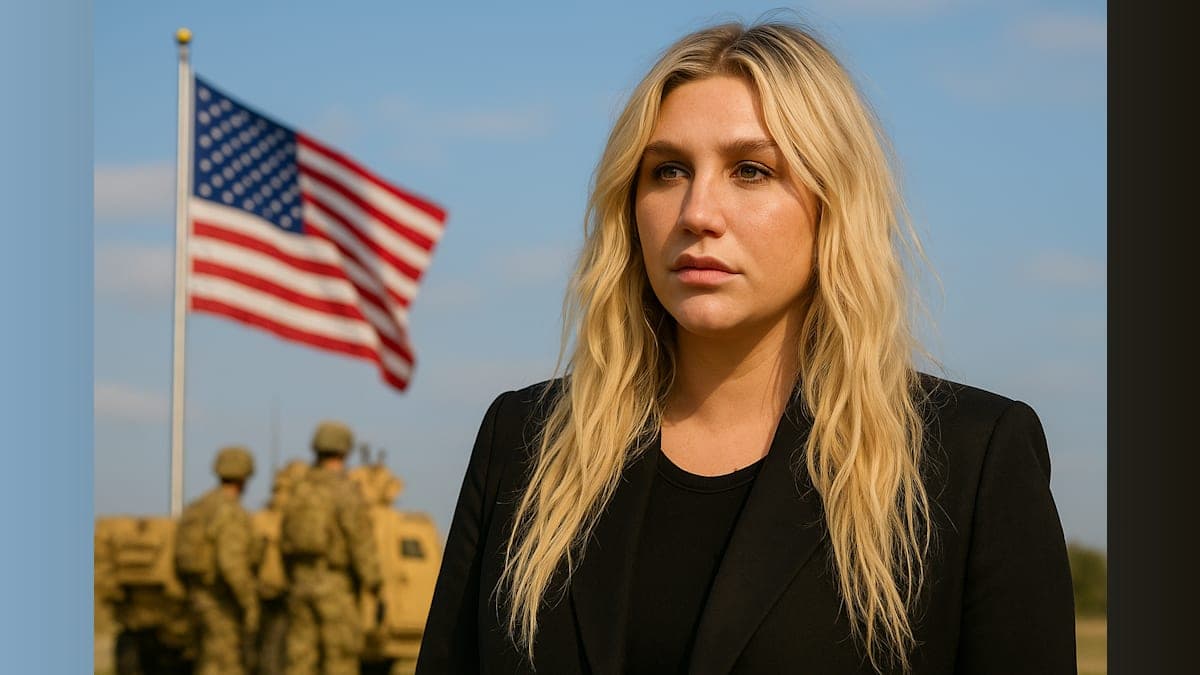
Recording artist Kesha has issued a sharp rebuke to the White House following the unauthorized use of her music in a social media post that she characterizes as promoting violence and military aggression.
The controversy stems from a video posted to the official White House TikTok account on February 10, 2026, which depicted military aircraft destroying a naval vessel while Kesha's song "Blow" played in the background. The post remained on the platform for several weeks before the artist became aware of its existence.
On Monday, Kesha responded publicly to the video, stating unequivocally that she does not authorize her music for such purposes. In her statement, the singer emphasized her opposition to violence, declaring that she does not approve of her artistic work being associated with military imagery or aggressive messaging.
The artist elaborated on her philosophical stance, stating that love should prevail over hatred and urging individuals to care for themselves and one another during challenging times. She characterized the video as demonstrating a blatant disregard for human life and described it as an assault on the collective well-being of viewers.
Kesha further criticized President Trump directly, referring to him as a "criminal predator" and making reference to unspecified files in which his name allegedly appears extensively. The artist appeared to suggest that the music controversy should not overshadow other concerns regarding the administration.
This incident represents the latest in a series of disputes between musicians and political figures over the unauthorized use of copyrighted music. Artists across the political spectrum have increasingly objected to their work being appropriated for political messaging without consent, particularly when the content conflicts with their personal values.
The White House has not responded to requests for comment regarding Kesha's objections or whether the administration obtained proper licensing for the musical content. The video remains accessible on the White House TikTok account as of this publication.
The controversy raises questions about intellectual property rights, artistic integrity, and the boundaries of government communication in the social media era. Legal experts note that unauthorized use of copyrighted material could potentially expose government entities to legal action, though such cases involving federal agencies present unique jurisdictional challenges.