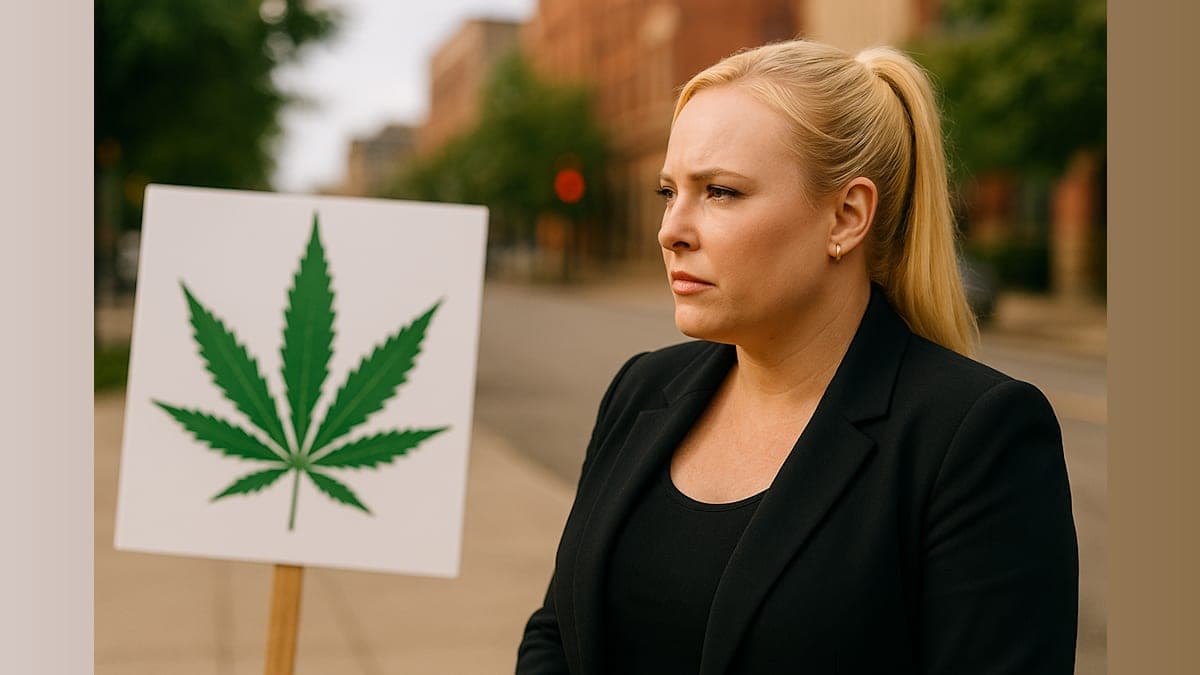
Political commentator and former television host Meghan McCain has issued a public statement retracting her support for marijuana legalization, more than a decade after championing the policy reform on economic grounds.
In a statement posted to social media on Wednesday, March 4, McCain, 41, expressed regret over her previous advocacy position. She stated that had she foreseen the current consequences affecting young people and urban environments, she would not have supported legalization efforts.
McCain specifically cited the pervasive presence of cannabis odor in major metropolitan areas and rideshare vehicles as evidence of negative societal impact. However, her statement did not provide detailed analysis of the specific harms to youth populations that informed her changed perspective.
Rising Concerns Over Youth Exposure
Data from America's Poison Centers indicates a significant increase in cannabis-related incidents reported to poison control facilities. According to reporting published in The New York Times, such cases rose from approximately 930 incidents in 2009 to more than 22,000 cases in the year prior to August 2025. This dramatic increase represents a nearly 24-fold rise over the sixteen-year period, suggesting heightened concerns about accidental exposure and consumption among vulnerable populations.
The statistics reflect a period spanning both pre-legalization and post-legalization eras in various states, complicating efforts to establish direct causation between policy changes and incident rates.
From Advocate to Critic: A Policy Evolution
McCain's current position represents a complete reversal from her 2012 stance, when she publicly endorsed marijuana legalization in her book co-authored with comedian Michael Ian Black. During promotional appearances for the publication, McCain articulated her support based on economic considerations and drew parallels between cannabis prohibition and the historical failure of alcohol prohibition.
In a 2012 television interview, McCain explained that her research into the economic benefits of decriminalization had convinced her to publicly support policy reform. She acknowledged personal experience with cannabis use during research activities and noted the normalized nature of marijuana consumption in certain urban environments.
Personal Experience Shapes Medical Marijuana Views
McCain's evolving perspective on cannabis policy has been influenced by personal tragedy. Following the death of her father, Senator John McCain, in August 2018 from glioblastoma, she expressed frustration regarding persistent stigma surrounding medical marijuana use for cancer patients.
During a 2019 television appearance, McCain referenced research published in Frontiers in Molecular Neuroscience indicating that cancer patients receiving THC and CBD compounds alongside traditional chemotherapy demonstrated extended survival periods compared to those receiving chemotherapy alone. The study suggested approximately one additional year of life for patients utilizing combined treatment approaches.
Senator McCain was diagnosed with a cancerous brain tumor in July 2017 and discontinued treatment one day before his death at age 81. His daughter's comments at the time reflected support for expanded access to medical cannabis for seriously ill patients.
Broader Policy Implications
McCain's public reversal occurs amid ongoing national debate regarding cannabis policy. As of 2025, numerous states have implemented various forms of marijuana legalization, ranging from medical use authorization to full recreational access. The long-term societal effects of these policy changes remain subjects of active research and political discussion.
Her statement highlights the complexity of drug policy reform, where initial projections based on economic modeling may not fully account for social and public health outcomes that emerge over time. The tension between medical applications, economic considerations, and quality-of-life concerns continues to shape policy debates at state and federal levels.
McCain's willingness to publicly acknowledge a changed position on a controversial policy issue represents a relatively uncommon practice in contemporary political discourse, where consistency is often valued over evolving perspectives based on observed outcomes.