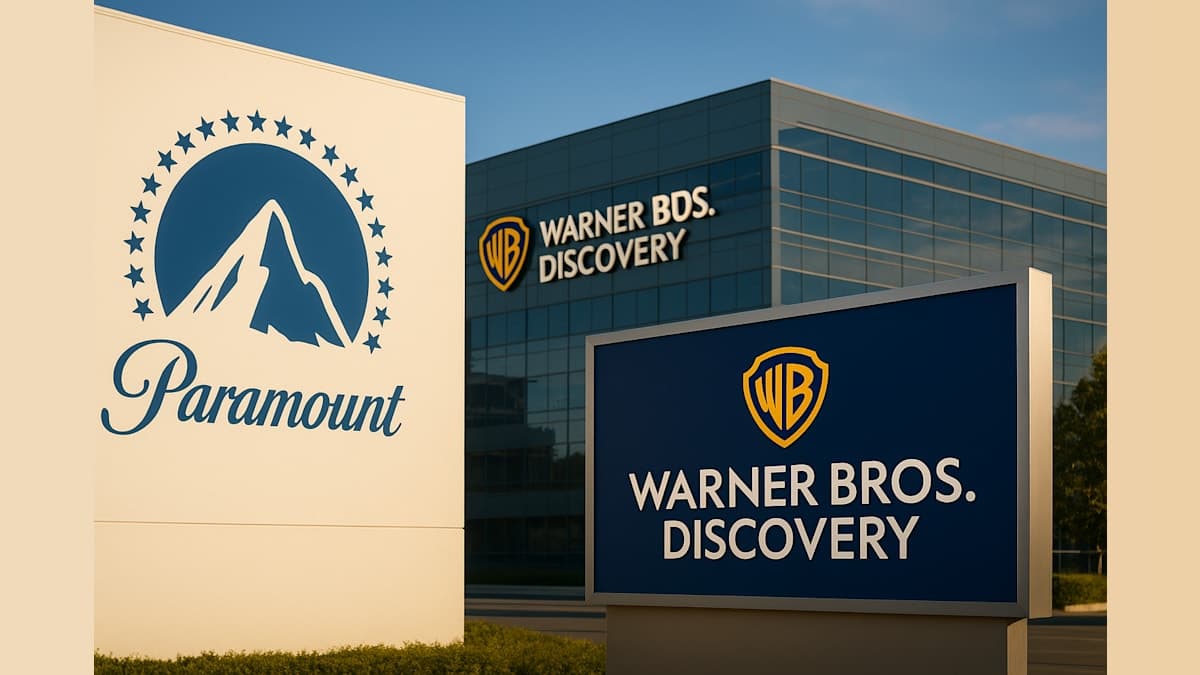
The entertainment industry witnessed a seismic shift on Friday as Paramount and Warner Bros. Discovery formally agreed to a historic merger valued at $111 billion, consolidating two of Hollywood's most storied studios under a single corporate umbrella.
The agreement represents the culmination of months of intense negotiations and speculation regarding the future ownership of Warner Bros. Discovery. The timing proved particularly dramatic, as the deal was finalized merely one day after Netflix withdrew from the competitive bidding process, leaving Paramount as the successful acquirer.
David Ellison, who serves as Chairman and Chief Executive Officer of Paramount, addressed the strategic rationale behind the acquisition in a statement released Friday. Ellison emphasized that the merger was designed to preserve the cultural heritage of both organizations while positioning the combined entity for future growth in an evolving media landscape.
"From the very beginning, our pursuit of Warner Bros. Discovery has been guided by a clear purpose: to honor the legacy of two iconic companies while accelerating our vision of building a next-generation media and entertainment company," Ellison stated.
The merger brings together Paramount's extensive film and television production capabilities with Warner Bros. Discovery's substantial content library and streaming infrastructure. Industry analysts suggest the consolidation reflects broader trends within the entertainment sector, where companies are seeking scale to compete effectively in the streaming era dominated by subscription-based services.
Both studios possess deep roots in American entertainment history. Paramount Pictures, founded in 1912, stands as one of the oldest continuously operating film studios in the world. Warner Bros., established in 1923, has produced countless cultural touchstones throughout its century-long history. The combination of these two powerhouses creates a formidable competitor in an increasingly consolidated media marketplace.
The $111 billion valuation underscores the significant assets both companies bring to the transaction, including intellectual property rights, production facilities, distribution networks, and streaming platforms. The merged entity will control an extensive catalog of films and television programming spanning decades of entertainment history.
Netflix's withdrawal from the acquisition process on Thursday added unexpected drama to the final stages of negotiations. The streaming giant's decision to exit the bidding cleared the path for Paramount to finalize the agreement without further competition from one of the industry's most financially robust players.
The merger will require approval from regulatory authorities, including the Federal Trade Commission and the Department of Justice, which scrutinize large corporate consolidations for potential antitrust concerns. Given the scale of the transaction and the market concentration it represents within the entertainment industry, regulatory review is expected to be thorough and potentially lengthy.
For employees of both organizations, the merger introduces uncertainty regarding potential restructuring, redundancies, and operational changes. Media industry mergers historically result in workforce adjustments as companies seek to eliminate duplicate functions and achieve cost efficiencies.
The transaction also carries implications for consumers, who may see changes to streaming service offerings, content availability, and subscription pricing structures as the combined company develops its strategic approach to the digital marketplace.
Additional details regarding the merger terms, including the structure of the transaction, leadership appointments, and integration timeline, are expected to be disclosed as the agreement progresses through regulatory review and shareholder approval processes.