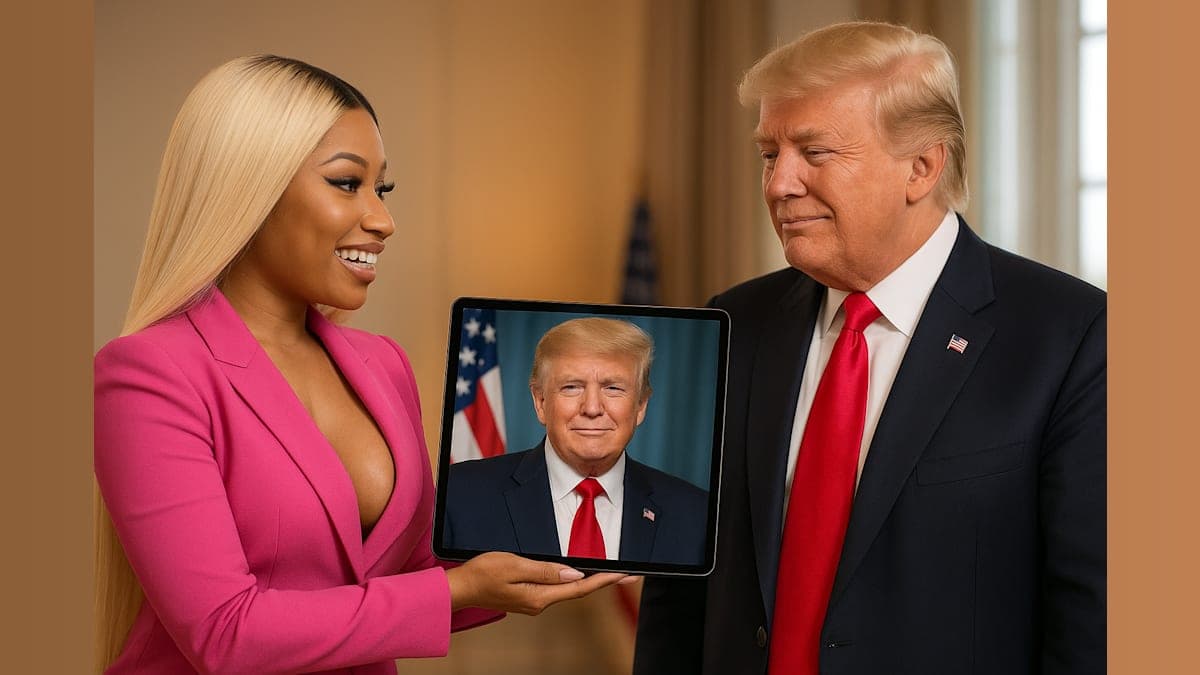
Recording artist Nicki Minaj commemorated Presidents' Day by sharing artificially generated images on social media that depicted her alongside a digital rendering of Donald Trump. The photographs, posted on February 16, showcase the intersection of celebrity culture, political expression, and emerging artificial intelligence technology.
The digitally manipulated images present an AI-generated version of the former president dressed in attire typically associated with Minaj's fanbase, known as the Barbz. The artificial Trump figure appears wearing a pink jacket and embellished denim jeans, accessorized with multiple pieces of jewelry—a stark departure from his characteristic business suits.
Analysis of the photographs reveals that the original images likely featured Minaj's husband, Kenneth Petty. A reflection visible in the window behind the AI-generated figure appears to show Petty, suggesting the digital alterations replaced him with the artificial Trump rendering. This creative choice represents a notable example of how public figures are utilizing AI technology to generate politically themed content.
The social media post arrives following previous public statements from the artist regarding her political views. In January, Minaj publicly identified herself as potentially Trump's most prominent supporter within the entertainment industry. The declaration preceded her announcement that she had received what she described as a Trump Gold Card, which she indicated provided expedited pathways to citizenship benefits.
The incident highlights the growing prevalence of artificial intelligence tools in creating and disseminating political messaging through social media platforms. As AI image generation technology becomes increasingly accessible and sophisticated, public figures across various industries are employing these tools to craft visual narratives that blend entertainment, politics, and personal branding.
This development raises broader questions about the role of celebrity political endorsements in the digital age and the implications of AI-generated content in shaping public discourse. As the 2026 political landscape continues to evolve, the intersection of entertainment, technology, and politics appears poised to play an increasingly significant role in how political messages reach and influence audiences.
The post generated substantial attention across social media platforms, contributing to ongoing conversations about celebrity political engagement and the ethical considerations surrounding AI-generated imagery in public communications.