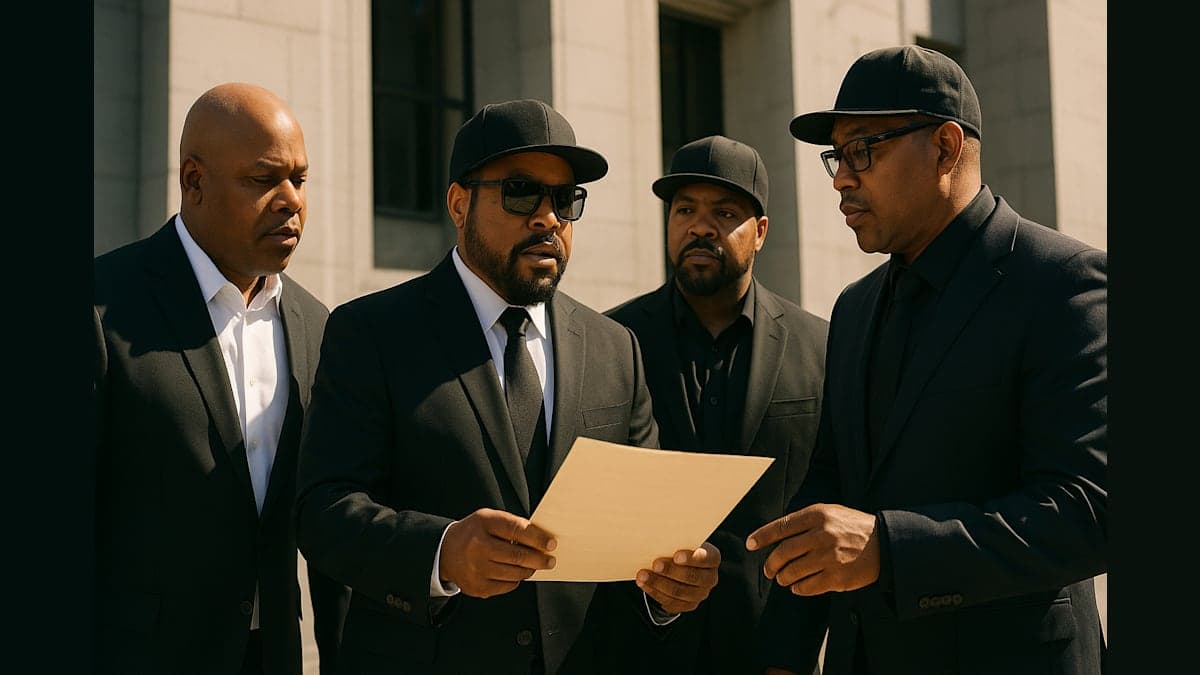
A legal dispute involving some of hip-hop's most prominent figures has escalated, with the rap supergroup Mount Westmore filing fraud allegations against a former business associate. The group, comprising Snoop Dogg, Ice Cube, Too Short, and E-40, has initiated legal action against Westside Merchandising, claiming the company made fraudulent representations to secure their business.
Mount Westmore, which formed in 2020, represents a collaboration among four West Coast rap icons with decades of combined industry experience. According to court documents, the artists entered into a licensing agreement with Westside Merchandising based on what they allege were false assurances regarding the company's capabilities and retail partnerships.
Allegations of Misrepresentation
The lawsuit alleges that Westside Merchandising induced the artists to sign with them rather than pursuing opportunities with larger merchandising companies by making specific claims about their business reach. The company purportedly represented that it maintained substantial partnerships with retail establishments and would generate significant revenue through channels beyond traditional concert venue sales.
Central to the artists' complaint is the assertion that Westside Merchandising failed to provide adequate financial accounting. The limited reports they received indicated merchandise sales totaling approximately $808,000 from concert dates, more than $90,000 from retail stores, and $13,000 through electronic commerce platforms. Despite receiving an advance payment, the rappers contend that Westside Merchandising has failed to remit hundreds of thousands of dollars owed under the contractual terms.
Competing Legal Claims
The current legal action represents a countersuit to litigation initiated by Westside Merchandising in November 2024. In that original complaint, the merchandising company alleged breach of contract, claiming the artists agreed to grant Westside exclusive rights to produce merchandise for their tour but failed to fulfill their performance obligations.
Westside Merchandising's complaint asserted that while the artists committed to a 60-date tour, they performed only a limited number of shows. The company claims it advanced over $1.3 million to the group but did not receive the contracted services in return. Both legal proceedings remain active in the court system.
Legal Response and Ongoing Proceedings
John Fowler, legal counsel for Westside Merchandising, issued a statement characterizing the countersuit as lacking merit. Fowler stated that the filing contains falsehoods and appears designed to deflect attention from what he describes as the artists' own contractual violations. He noted that the court has previously ruled against motions filed by the opposing party and referenced judicial criticism of their legal team's conduct.
According to Fowler, Westside Merchandising maintains that it sustained damages exceeding the initial $1.3 million investment due to the artists' alleged failure to perform agreed-upon services. The attorney expressed confidence in his client's position and indicated readiness to proceed to trial.
The Mount Westmore group is seeking unspecified damages in their fraud complaint. The case highlights the complex business arrangements that underpin modern entertainment ventures and the potential for disputes when expectations regarding performance obligations and financial accounting diverge between contracting parties. As both cases progress through the judicial system, the outcome may have implications for how artist merchandise agreements are structured and enforced within the music industry.