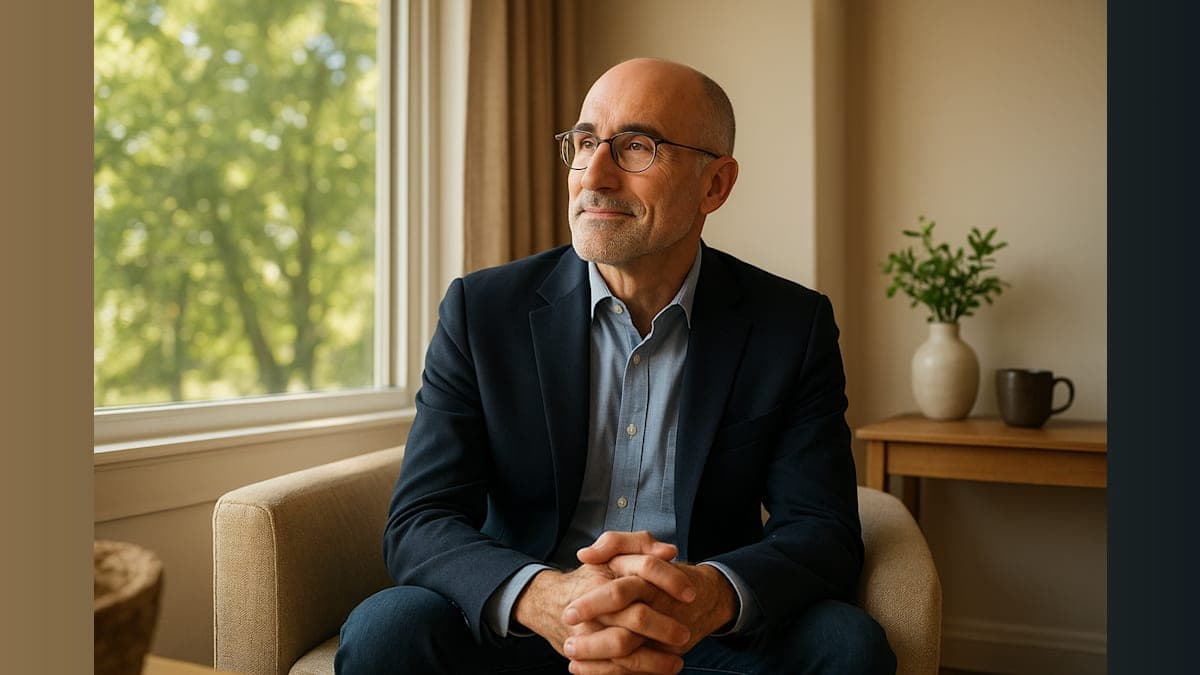
For decades, society has promoted a simple formula for success: acquire more money, achieve greater status, accumulate additional possessions. However, Dr. Arthur Brooks, a Harvard University professor and leading happiness researcher, presents compelling evidence that this approach becomes counterproductive as individuals enter the second half of life.
Brooks, author of "From Strength to Strength" and co-author with Oprah Winfrey of "Build the Life You Want," has dedicated his career to studying the science of happiness. His research reveals a fundamental shift that successful, contented people make as they age: they transition from addition to subtraction.
The Mathematics of Contentment
According to Brooks, society conditions individuals to believe satisfaction derives from continuous acquisition. The message remains consistent throughout early adulthood: pursue more money, more power, more pleasure, more recognition. This approach, however, represents what Brooks characterizes as the inefficient path to happiness.
The researcher proposes an alternative formula for genuine satisfaction: happiness equals what one possesses divided by what one desires. This mathematical framework suggests two distinct pathways to greater contentment. The first involves endless accumulation, attempting to increase the numerator indefinitely. The second, which Brooks identifies as the superior approach, focuses on reducing the denominator by managing and minimizing wants.
This strategy becomes particularly relevant as individuals confront the biological realities of aging. Physical capabilities diminish, professional opportunities may narrow, and the pursuit of certain goals becomes increasingly difficult. Rather than fighting these natural limitations, Brooks advocates for adapting one's desires to align with life's changing circumstances.
Practical Strategies for Managing Desires
Brooks acknowledges that advising people to want less sounds abstract without concrete implementation strategies. He recommends conducting a personal audit of major life goals using a straightforward evaluation criterion: Would this achievement matter if no one else knew about it?
This question serves as a powerful filter for distinguishing between authentic personal aspirations and goals driven primarily by external validation. If a particular ambition loses significance when stripped of public recognition, it likely lacks the depth of meaning necessary for lasting fulfillment.
The researcher further suggests redefining success itself. His research on midlife satisfaction indicates that individuals who shift their focus from status acquisition to service-oriented activities report substantially higher levels of purpose and deeper interpersonal relationships. This pattern appears particularly pronounced among men, who often face greater societal pressure to maintain traditional markers of achievement.
The Neuroscience of Gratitude
Brooks's recommendations align with broader scientific research on well-being. Daniel Levitin, professor emeritus of psychology and neuroscience at McGill University, emphasizes the neurological benefits of gratitude in his work "Successful Aging." According to Levitin, practicing gratitude for existing blessings produces measurable changes in brain chemistry, promoting more positive emotional states and activating neural pleasure circuits.
This scientific perspective underscores a crucial point: without active appreciation for current circumstances, even genuine blessings fail to provide lasting satisfaction. The practice of gratitude transforms abstract positives into deeply felt sources of contentment.
A Cultural Shift in Aging
Brooks's framework represents more than personal advice; it suggests a fundamental reorientation toward aging in contemporary society. Rather than viewing the second half of life as a period of inevitable decline and loss, his research presents it as an opportunity for deliberate refinement and deepening of what truly matters.
This perspective requires cultivating internal strength to distinguish between genuine needs and superfluous desires. It demands intentional investment in relationships, community connections, and personal growth rather than continued accumulation of external markers of success.
The implications extend beyond individual well-being. Communities benefit when experienced members redirect energy from personal advancement toward service and mentorship. Organizations gain wisdom when leaders prioritize meaningful contribution over status preservation. Families strengthen when older members model contentment based on internal values rather than external validation.
For those approaching or navigating middle age, Brooks's research offers both reassurance and challenge. The reassurance: pursuing endless accumulation represents neither the only path nor the optimal one. The challenge: genuine satisfaction requires the discipline to examine desires critically and the courage to release those that no longer serve authentic well-being.
In an era characterized by constant stimulation and perpetual striving, the notion that less might actually yield more stands as a countercultural proposition. Yet the evidence from happiness research suggests this ancient wisdom, now validated by contemporary science, offers a reliable compass for navigating the second half of life with grace, purpose, and genuine contentment.