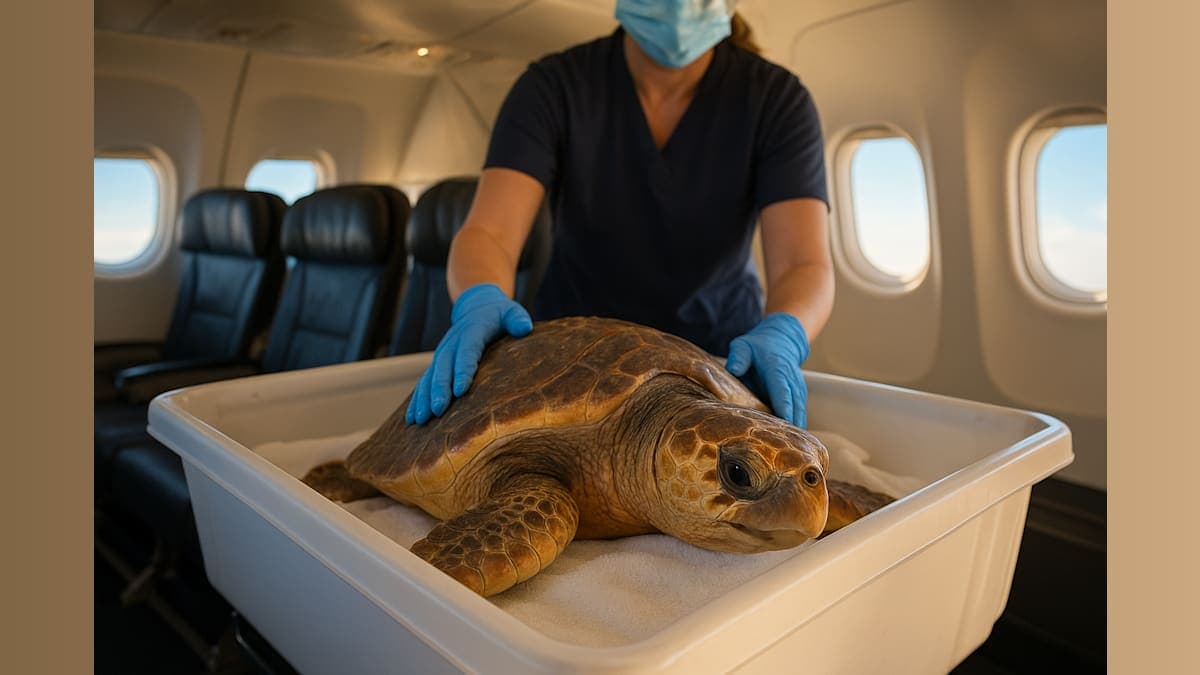
A juvenile loggerhead turtle has become an unlikely airline passenger following a remarkable rescue operation that spanned multiple organizations and countries. The endangered sea turtle, subsequently named Crush, was discovered on the shores of Jersey Island after Storm Goretti displaced the warm-water species hundreds of miles from its natural habitat.
Storm Goretti, which struck Europe on January 9, brought devastating winds reaching 110 miles per hour and caused widespread disruption across the continent. Among its unexpected casualties was the young turtle, which suffered from cold stunning—a critical condition in which prolonged exposure to frigid waters renders the reptile immobile and unable to function normally.
Emergency Veterinary Intervention
Following the discovery by a local beachcomber, the turtle received immediate medical attention at New Era Hospital under the care of veterinarian Peter Haworth. The animal presented in a severely weakened and malnourished state, requiring stabilization in controlled conditions. The Jersey Oyster Company provided essential warmed seawater for the temporary holding tank, enabling veterinary staff to begin the recovery process.
Diagnostic imaging revealed an abnormal accumulation of sand within the turtle's esophagus, which medical personnel partially removed to prevent potential blockages that could compromise the animal's ability to feed and recover. However, the limited space available at the Jersey facility necessitated transfer to a more comprehensive care center equipped for long-term rehabilitation of marine species.
Unprecedented Transportation Solution
Transportation presented a significant challenge for the fragile patient. A conventional sea voyage across the English Channel posed substantial risks, as the turbulent conditions could induce excessive stress on the already compromised animal. Recognizing the urgency of the situation, veterinarian Haworth contacted Loganair to explore alternative transportation methods.
The airline approved an extraordinary accommodation, granting the turtle passage as a first-class passenger on a scheduled commercial flight to Southampton, England. Ronnie Matheson, chief commercial officer at Loganair, acknowledged the unusual nature of the request. The airline's personnel coordinated extensively with veterinary staff to ensure appropriate handling protocols throughout the journey.
Dan Townsend, head of airside operations at Southampton Airport, emphasized the facility's commitment to supporting such specialized animal movements. Upon arrival, the turtle was transported an additional 90 miles by ground to the SeaLife Centre in Weymouth, a facility equipped with the resources necessary for extended rehabilitation of marine species.
Conservation Implications
Loggerhead turtles maintain endangered status under international conservation frameworks, making each individual significant to species recovery efforts. These marine reptiles typically inhabit warmer waters and face numerous threats including habitat loss, fishing gear entanglement, and climate-related disruptions to their migratory patterns.
The SeaLife Centre has indicated plans to release Crush back into appropriate loggerhead habitat during the spring season, provided the animal achieves full recovery and demonstrates the physical capability to survive in the wild. This timeline allows for comprehensive medical monitoring and gradual acclimatization to conditions the turtle will encounter upon release.
The rescue operation illustrates the collaborative approach necessary for effective wildlife conservation in an era of increasing environmental pressures. The coordinated response involving veterinary professionals, commercial aviation, airport operations, and specialized rehabilitation facilities demonstrates the infrastructure available to support endangered species recovery when circumstances demand extraordinary measures.