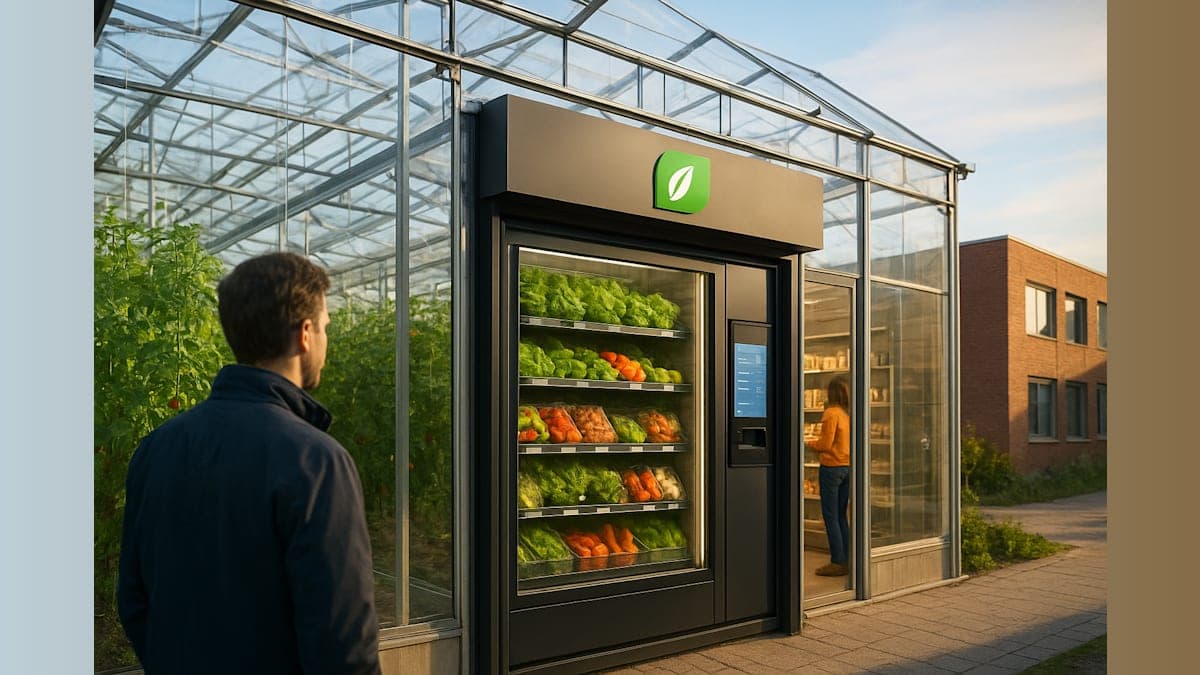
A groundbreaking approach to urban agriculture is emerging from The Hague, where Dutch agri-tech firm LocalDutch has engineered a solution that could fundamentally alter how communities access fresh produce. The company's Urban Farm Shops concept integrates greenhouse cultivation directly with retail operations, creating a seamless farm-to-consumer model that operates within city limits.
The innovation addresses a persistent challenge in modern food systems: the distance between production and consumption. By consolidating growing operations, retail space, and delivery logistics under one roof, LocalDutch aims to eliminate the inefficiencies that plague traditional supply chains, particularly the transportation costs and food waste associated with long-distance distribution networks.
Automation Solves Critical Expertise Gap
The technical sophistication of greenhouse agriculture has historically presented a significant barrier to widespread adoption. Maintaining optimal growing conditions requires specialized knowledge in climate management, a skill set that remains scarce in the agricultural sector. LocalDutch has addressed this limitation through comprehensive automation.
The company's system employs what it describes as an indoor climate autopilot, utilizing artificial intelligence and cloud-based services to manage environmental conditions centrally. This technological framework allows individual locations to operate successfully without requiring on-site climate specialists, dramatically reducing the expertise threshold for establishing productive greenhouse operations.
Arne Spliet, co-founder of LocalDutch, emphasized the practical implications of this approach in a company statement: "What we are bringing to the United States is truly Dutch technology, applied in a way that is both effective and easy to scale. In a sector where skilled greenhouse climate specialists are scarce, our system automates much of that work. That helps ensure consistently successful local production—and that is exactly what many communities around the world urgently need."
Revenue Model Designed for Local Flexibility
The Urban Farm Shops business model incorporates multiple revenue streams to ensure financial sustainability across diverse markets. Direct retail sales form the foundation, supplemented by Community Supported Agriculture membership programs and partnerships with last-mile delivery services. This diversified approach provides adaptability to local market conditions while maintaining consistent operational standards across locations.
The company envisions these facilities serving as more than mere points of transaction. LocalDutch positions the Urban Farm Shops as community gathering spaces centered around locally grown food, fostering social connections while addressing practical nutritional needs.
Targeting Food Access Challenges
The significance of this model extends beyond operational efficiency. In numerous regions across the United States, the Caribbean, and Africa, access to fresh produce remains inconsistent, with communities depending on supply chains that span considerable distances. The Urban Farm Shops concept directly confronts this accessibility issue by establishing production facilities within the communities they serve.
Year-round vegetable production represents a particular advantage in areas where seasonal limitations or climate conditions restrict local agriculture. The controlled environment of automated greenhouses enables consistent harvests regardless of external weather patterns, providing communities with reliable access to fresh produce throughout the calendar year.
Strong Investor Interest and Initial Funding
The financial reception to LocalDutch's concept has been notably positive. The company reports receiving over 68 million dollars in funding proposals from interested investors, suggesting substantial confidence in the viability of the Urban Farm Shops model.
In February 2025, LocalDutch secured a 40,000 dollar grant from Pennsylvania's Agricultural Innovation Program, marking official recognition and support from state-level agricultural authorities. This grant specifically supports the development and implementation of the automated greenhouse model, providing validation for the technological approach.
Implications for Local Food Systems
The Urban Farm Shops initiative represents a significant evolution in thinking about urban food production. Rather than attempting to retrofit traditional agricultural methods for city environments, LocalDutch has engineered a purpose-built system that leverages advanced technology to overcome the inherent challenges of urban farming.
The environmental benefits extend beyond reduced transportation emissions. By producing food at the point of sale, the model minimizes the waste associated with distribution, storage, and the extended time periods that typically separate harvest from consumption. Produce can move from greenhouse to customer within hours rather than days or weeks, preserving nutritional value and extending shelf life.
As LocalDutch advances its expansion plans, the success or failure of this model will provide valuable insights into the scalability of high-tech urban agriculture. The combination of Dutch greenhouse expertise with artificial intelligence and automation may establish a template for addressing food accessibility challenges in communities worldwide, transforming the relationship between cities and their food sources.