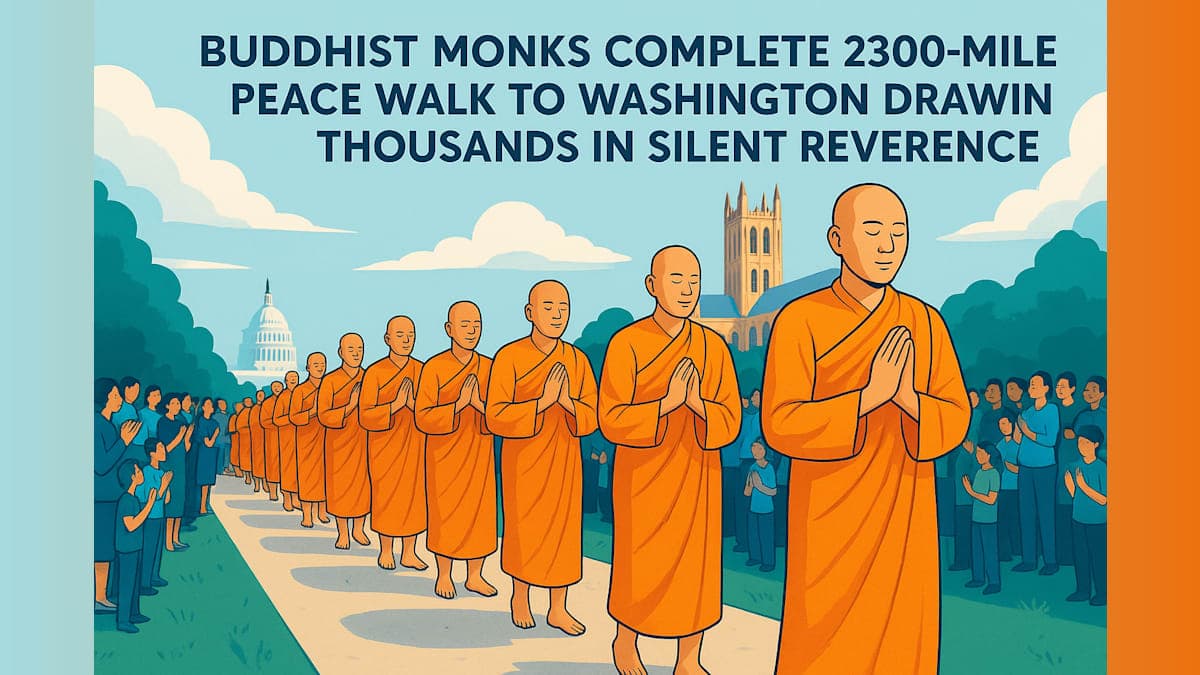
The nation's capital witnessed an extraordinary moment of collective tranquility as 19 Buddhist monks completed their 2,300-mile peace pilgrimage, arriving barefoot at the National Cathedral while snow still blanketed the ground. The culmination of their 15-week journey from Fort Worth, Texas, drew thousands of residents into the streets, creating what longtime Washingtonians described as an unparalleled display of public reverence.
Venerable Bhikkhu Pannakara, the spiritual leader guiding the monks, addressed the assembled crowds with words that captured the significance of the moment. The senior monk expressed his hope that those present would carry the memory of this gathering throughout their lives, marking it as a defining experience in the pursuit of peace.
A Journey Rooted in Ancient Tradition
The pilgrimage represents a centuries-old practice within Theravada Buddhism, wherein monks undertake extended walking journeys to promote peace and spiritual awakening. The 19 Bhikkhus, senior monks who traveled from monasteries across the Theravada Buddhist world, departed from the Hương Đạo Vipassana Bhavana Center with a singular mission: to spread peace through mindful presence and meditation.
Throughout their journey, Venerable Pannakara conducted Dharma talks focused on Vipassana meditation, a breathing practice taught by the Buddha himself. The term Vipassana refers to insight meditation, a technique designed to cultivate awareness and inner peace through focused contemplation.
Washington Embraces Interfaith Moment
The monks' arrival transformed multiple Washington venues into spaces of profound stillness. Their first major public appearance occurred at American University's Bender Arena, where 3,500 attendees observed in complete silence as the saffron-robed figures entered to share their teachings.
As the procession moved down Wisconsin Avenue, thousands lined the streets. Many spectators demonstrated their understanding of Buddhist protocol by remaining quiet or offering the traditional Pali greeting of approval, calling out "Sadhu," meaning "wisely done" in the language spoken by the Buddha.
Washington Episcopal Bishop Mariann Budde hosted an interfaith gathering at the National Cathedral to commemorate the monks' arrival. The event represented a significant moment of religious unity, bringing together diverse faith communities in shared appreciation for the pilgrimage's message of peace.
Historic Conclusion at Lincoln Memorial
The journey reached its symbolic conclusion at the Lincoln Memorial, where an enormous gathering assembled on the iconic steps. Venerable Pannakara invited the assembled thousands to share a moment of withdrawn silence and conscious breathing, offering each person a simple mantra: "Today will be my peaceful day."
The location held particular resonance, with numerous observers noting parallels to Martin Luther King Jr.'s historic address delivered from the same steps. The choice of venue underscored the universal nature of the peace message, transcending religious and cultural boundaries.
Throughout their journey, the monks found accommodation at fire departments, relying on the hospitality of local communities. Their Wednesday procession took them past Capitol Hill before the final gathering, creating a path that touched the heart of American democracy.
Unprecedented Community Response
The pilgrimage captured national attention, with millions following the Walk for Peace through social media channels. The sight of barefoot monks walking silently along American roads resonated deeply with citizens across the country, regardless of religious affiliation.
Local resident Nicole Krakora articulated the sentiment shared by many longtime Washingtonians in her assessment of the events. After four decades in the capital, she characterized the series of public gatherings as unprecedented in their beauty, respect, and loving atmosphere. Her description of the experience as one of "beautiful silence" captured the essence of what made these events remarkable in a city accustomed to political noise and constant activity.
The successful completion of this ambitious pilgrimage demonstrates the enduring power of contemplative practice and peaceful demonstration in contemporary society. As the monks concluded their journey through the heart of American political life, they left behind a legacy of tranquility and an invitation for all residents to embrace peace as a daily practice.