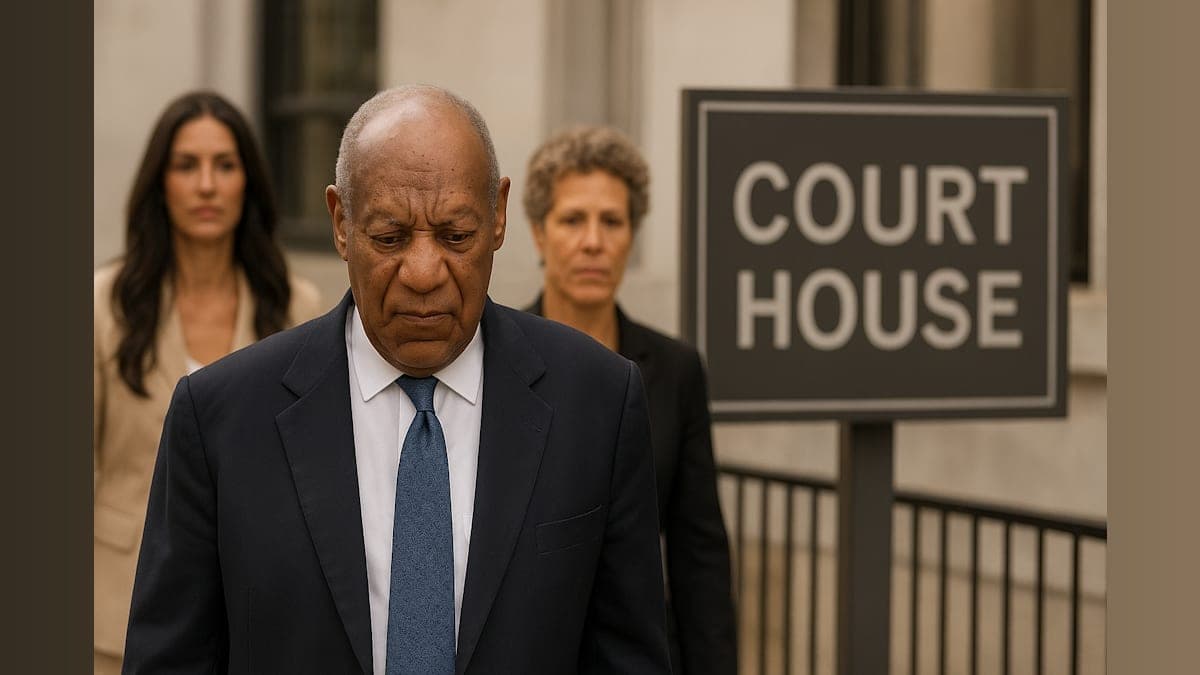
Bill Cosby's legal team has filed motions to exclude testimony from multiple accusers in an upcoming civil trial, according to court documents that reveal the comedian's strategy to limit evidence presented against him.
The legal filings seek to bar testimony from several women, including supermodel Janice Dickinson and Andrea Constand, whose accusations have been central to previous legal proceedings against the former television star. Additionally, Cosby's attorneys are requesting that allegations from Barbara Bowman, Theresa Picking Serignese, and other accusers be deemed inadmissible during the trial.
Legal Arguments Center on Admissibility
The defense argues that evidence related to these allegations should be excluded because they reference prior alleged incidents that never resulted in criminal charges. This legal strategy represents a common approach in civil litigation where defendants attempt to narrow the scope of evidence that juries may consider.
The motion comes as Cosby prepares to face a lawsuit filed by Donna Motsinger, who alleges that the comedian drugged and sexually assaulted her in 1972 while she was employed as a server at the Trident restaurant in Sausalito, California. The establishment, located in the San Francisco Bay Area, was a well-known dining venue during that era.
Details of the Allegations
According to court filings, Motsinger claims that Cosby provided her with a pill that she believed to be aspirin. She alleges that after consuming the medication, she experienced unusual symptoms and subsequently lost consciousness. The plaintiff states that she regained awareness the following day in her own bed, wearing only undergarments, with no recollection of how she arrived there.
The case has drawn renewed attention to previous deposition testimony given by Cosby in connection with related litigation. During that sworn testimony, the comedian acknowledged obtaining a prescription for Quaaludes from a gynecologist and subsequently refilling that prescription seven times. He admitted that his intention was to provide the sedative medication to women with whom he hoped to engage in sexual activity. Notably, Cosby stated under oath that he never consumed the pills himself.
Background and Previous Convictions
The upcoming trial occurs against the backdrop of Cosby's complicated legal history. The entertainer served nearly three years in a Pennsylvania correctional facility following his conviction on charges of aggravated indecent assault. However, in 2021, the Pennsylvania Supreme Court overturned that conviction, citing procedural irregularities in the prosecution's case. The high court determined that a previous agreement with prosecutors should have prevented criminal charges from being filed.
The reversal of Cosby's criminal conviction has not precluded civil litigation, as the standards of proof differ significantly between criminal and civil proceedings. While criminal cases require proof beyond a reasonable doubt, civil cases operate under the lower standard of preponderance of evidence.
Implications for the Upcoming Trial
The court's decision regarding whether to allow testimony from additional accusers could prove pivotal to the outcome of Motsinger's lawsuit. In similar cases, courts have sometimes permitted testimony from other alleged victims to establish a pattern of behavior, while in other instances such evidence has been excluded as prejudicial or irrelevant to the specific claims at hand.
Legal experts note that the judge's ruling on these motions will likely shape trial strategy for both sides and could influence whether the case proceeds to a jury verdict or results in a settlement. The presiding judge has not yet issued a decision on the defense's motions to exclude testimony and evidence.
As the trial date approaches, the case continues to generate significant public interest, representing one of several ongoing civil actions against the comedian whose career and public image have been fundamentally altered by numerous allegations spanning multiple decades.